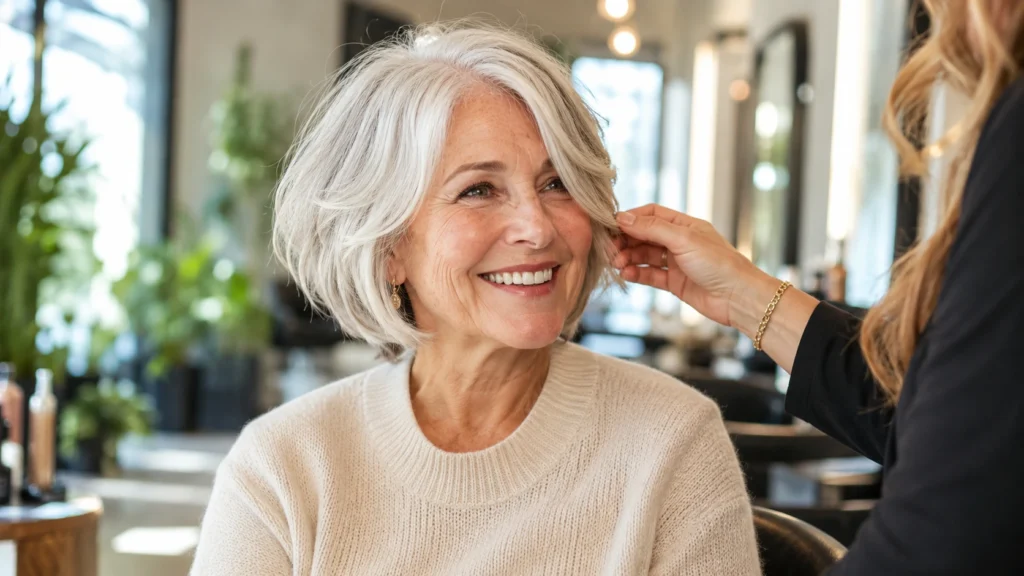
Low Maintenance Hairstyles for 60 Year Old Woman With Fine Hair can make mornings so much easier, especially when fine hair starts to feel like you’re fighting gravity every single day. I’ve had clients walk into my chair convinced their only options were “short and boring” or “long and flat,” and every time I get to tell them that’s just not true. The right cut does the heavy lifting so your mornings don’t have to. So let’s talk about the fourteen styles that actually deliver fullness, ease, and a little bit of swagger, no blow-dryer marathon required.
My Styling Notes
I’ll never forget the client who brought me a Pinterest photo of a shaggy, layered cut on a model with thick, wavy hair, and asked for that exact style. I almost cut it as shown, but halfway through I could already see it was going to fall flat and stringy by week three. So I stopped, reworked the shape into something blunter with way less layering, and explained why as I went. She left thinking she’d gotten what she asked for, until she came back six weeks later and admitted the original photo cut would’ve been a disaster on her hair. Now it’s the first thing I tell every client with fine hair: bring me a photo of someone with your texture and density, not just a style you love. Your hair type decides what actually works, and no amount of wishing changes that math.
14 Effortless Cuts Every Woman Over 60 With Fine Hair Should Know
1. The Wash and Wear Bob
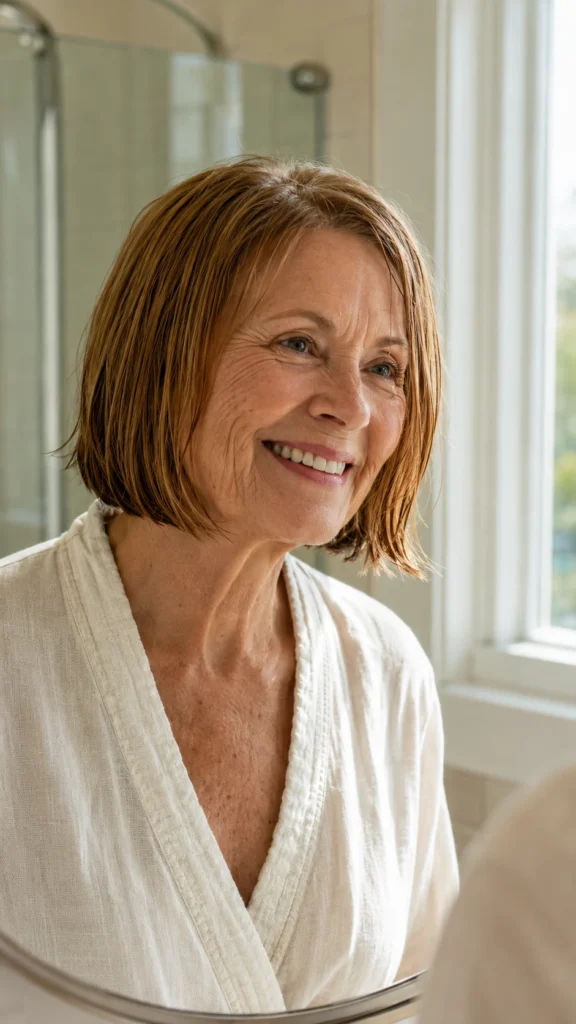
This is the cut I reach for when a client tells me she wants to look pulled together without setting an alarm ten minutes earlier. A blunt edge at the chin or jaw gives fine hair the illusion of thickness because all that visual weight lands in one clean line instead of getting lost in wispy layers. It air dries into shape more often than not, and a little mousse worked into damp roots is really all it needs. If you want to explore more no-fuss options, take a look at our guide on wash and wear haircuts for women over 60.
One thing I always tell my clients is that the bob only works if you commit to the blunt line. The second you ask for soft layers throughout, you lose the density trick that makes this cut so forgiving.
2. The Soft Pixie
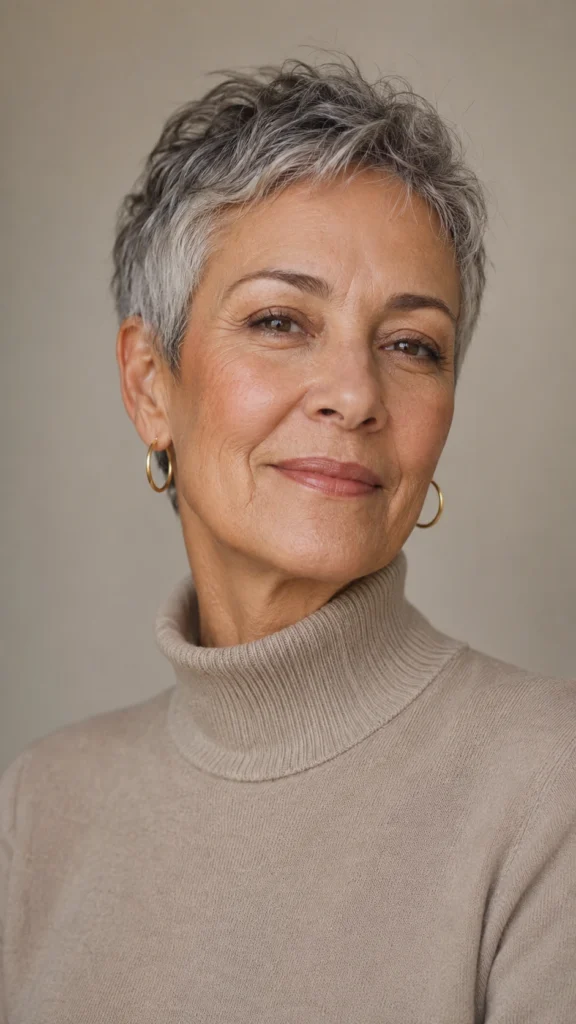
Short hair reads fuller because there’s simply less length for gravity to drag down, and that’s the whole secret behind why this cut is a favorite of mine for fine hair over sixty. The classic pixie cut
has a rich history of giving women a bold, timeless look with maximum volume at the crown. Styling genuinely takes under a minute—just a dab of texture paste worked through with your fingers while it’s still slightly damp, and you’re out the door. I’ve had clients cry happy tears in my chair over how much time this gave them back in the morning.
The honest catch? A pixie grows out fast and shows every bit of it. You’ll want to budget for a trim every four to six weeks if you want it looking crisp instead of shapeless.
3. The Tapered Lob
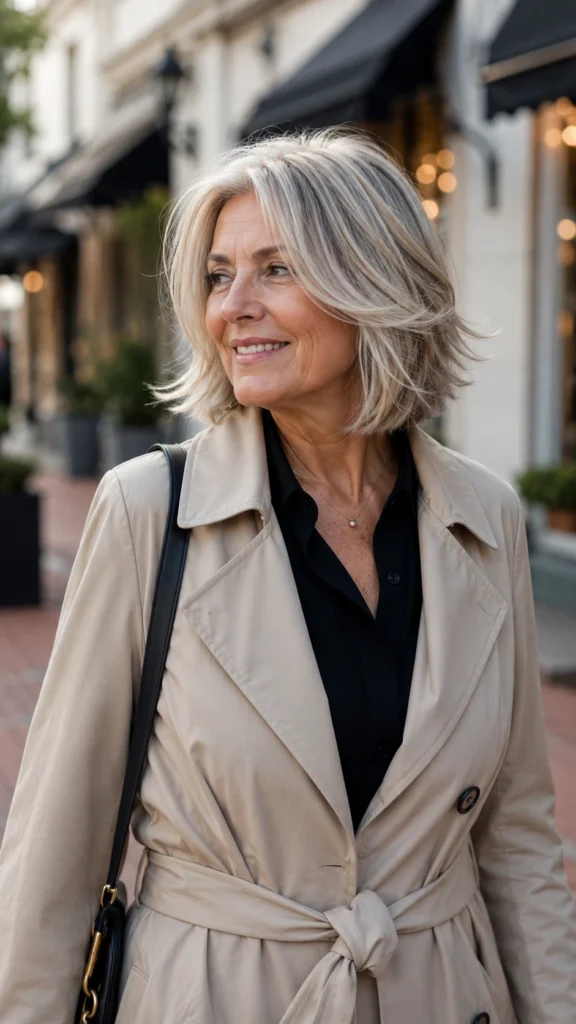
If you’re not ready to say goodbye to length but you’re tired of your hair looking flat by noon, the tapered lob is your middle ground. It sits just above the shoulders with a slightly tapered back, and face framing pieces add softness without adding a single extra minute to your routine. Check out more stunning lob haircuts for thin hair if you’re leaning toward keeping some length.
A few things make this cut sing:
- Soft layers only at the face, not throughout
- A side part to add instant lift at the crown
- Regular trims every six to eight weeks to keep the taper clean
4. The Blunt Collarbone Cut
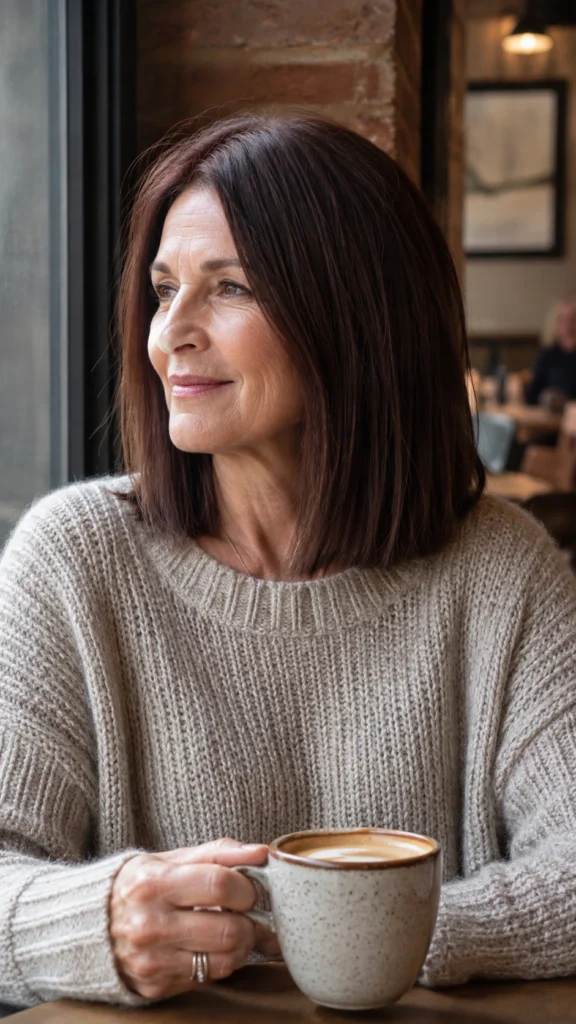
This is the longest option on my low maintenance list, and it only works if you’re willing to air dry and skip long layers, which pull fine hair thin and stringy fast. Keep it one length, keep it blunt, and you’ll get a surprisingly full look for a longer style. I always tell clients this cut is a bit of a trust fall. It looks better the less you fuss with it.
What’s the one thing about your current haircut that’s driving you a little crazy right now?
5. The Textured Crop
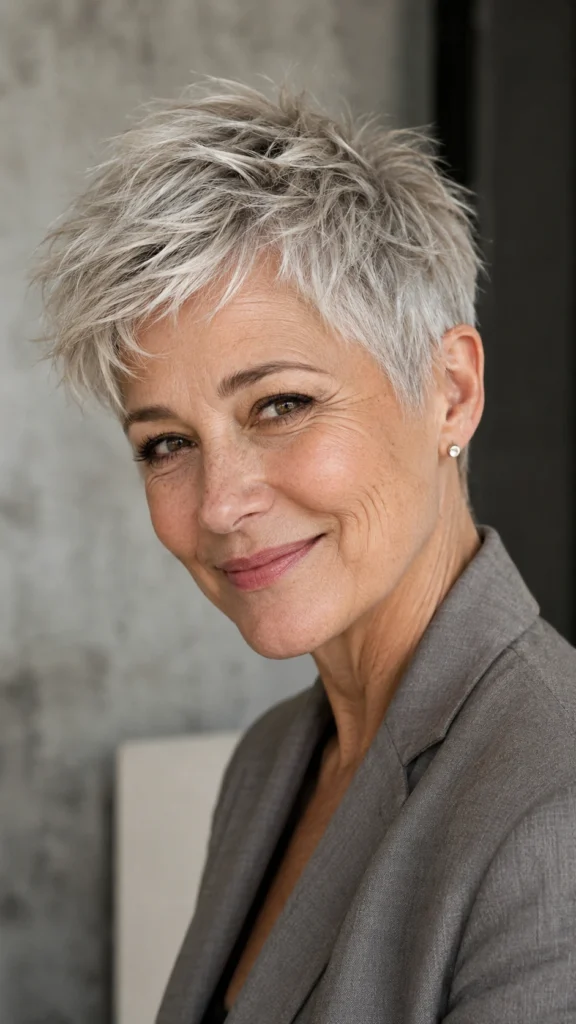
Short, choppy, and just a little bit rebellious, this cut is what I put a client in when she tells me she wants to feel like herself again after years of playing it safe. The crown gets extra lift through texturizing, and the jagged ends add dimension that a smooth, one length cut just can’t fake. It’s fantastic on straight or slightly wavy hair, and it genuinely shines on oval or longer face shapes.
The tradeoff worth knowing about is that this one does ask for a little product every single day to keep the layers separated and looking intentional rather than just messy.
6. The Short Stacked Bob
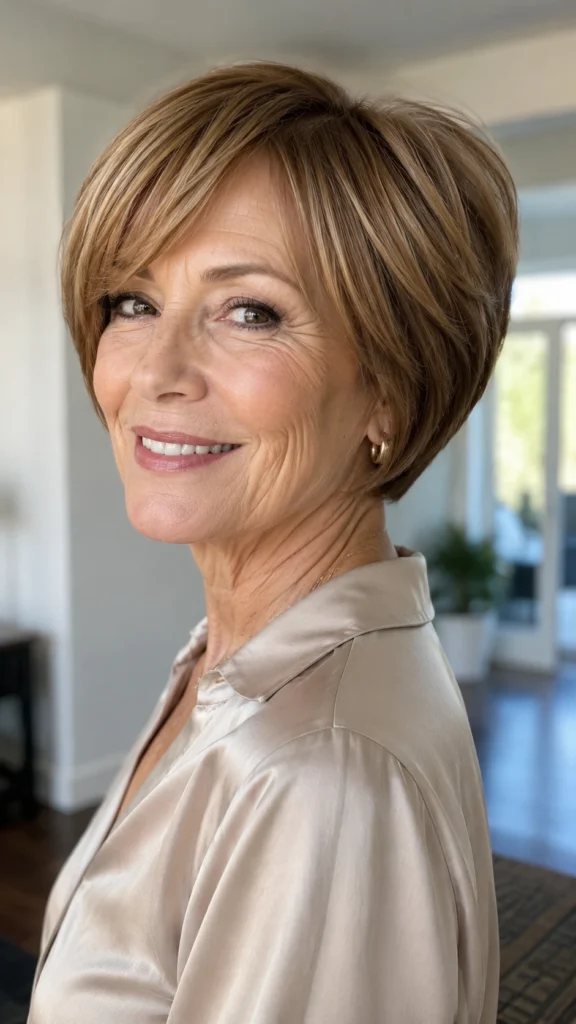
Graduated layers, shorter at the nape and slightly longer up front, build volume exactly where fine hair thins out first, right at the crown and through the back. An angled version, longer in front and shorter in back, does double duty by framing your face and drawing the eye up toward your cheekbones instead of down toward any thinning near your temples.
A quick trick I’ve learned over the years is that a light mousse worked through damp roots, followed by a rough dry upside down for just a minute, gives this cut a natural bounce without a single hot tool.
7. The Modern Shag with Curtain Bangs
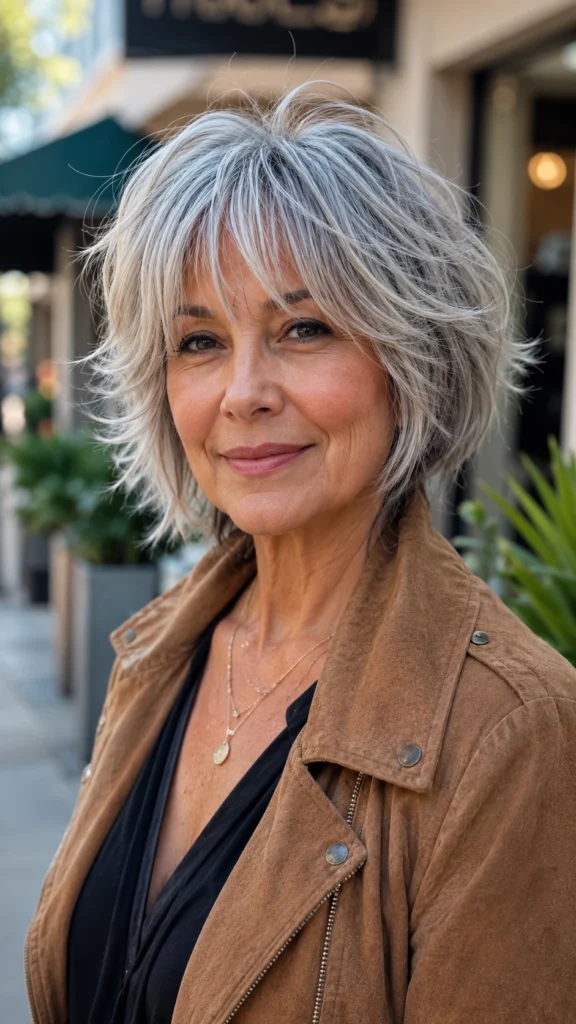
I’ll be honest, I didn’t expect this one to become such a favorite among my clients over sixty, but here we are. Heavily texturized layers add movement and body without a blow dryer in sight, and curtain bangs soften the whole face while styling with nothing but your fingers.
- Works beautifully on naturally wavy fine hair
- Softens square or angular face shapes
- Needs almost nothing beyond a texturizing spray on damp hair
It’s edgier than the classic cuts on this list, and honestly, that’s exactly why so many women love it. It feels current, not like a “safe” haircut.
8. The Grown Out Pixie or Shixie
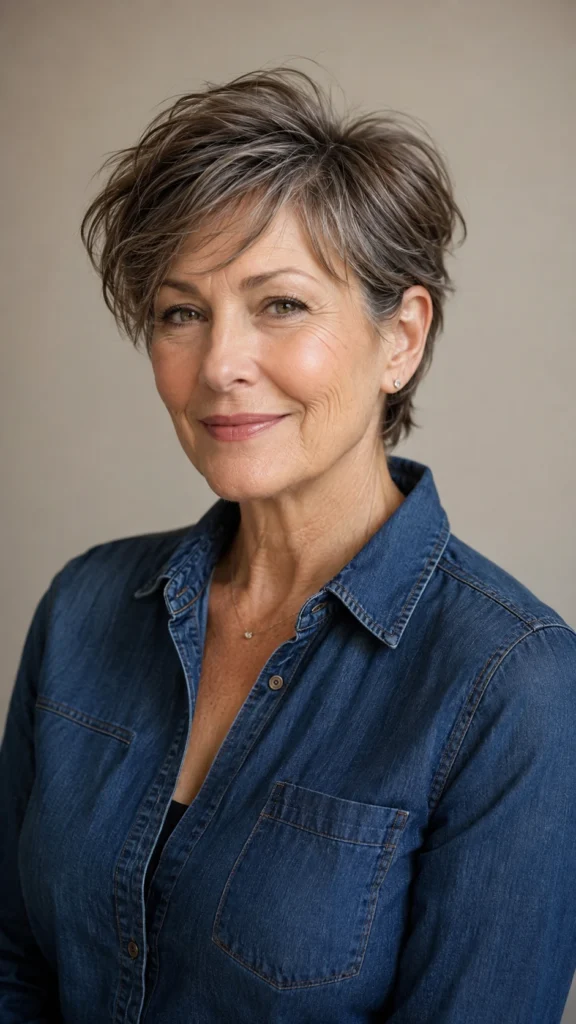
Somewhere between a pixie and a bob lives this shape, longer on top with shorter sides, and it might be the most forgiving cut on this entire list. You can tuck it behind your ears, tousle it for texture, or smooth it down for something polished, all with the same haircut.
What I love telling clients is that this style stretches beautifully between trims because the growing out process actually adds to the shape instead of ruining it. It’s a genuinely low stress cut to live with.
9. The Layered Lob
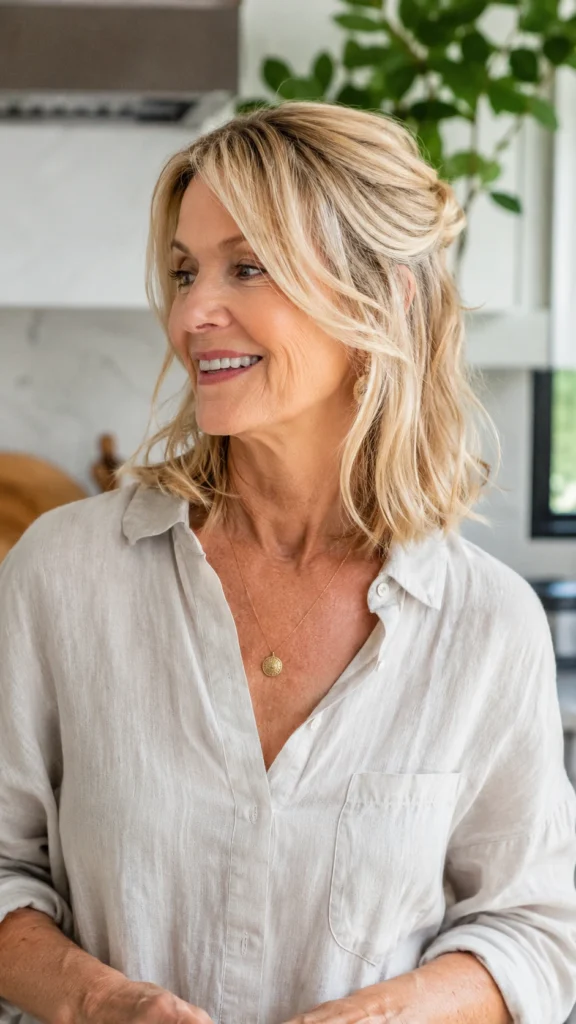
For the client who isn’t ready to give up a ponytail on lazy days, the layered lob is where I land nearly every time. It sits around the collarbone, short enough to dodge that flat, stringy look fine hair gets past the shoulders, but long enough to twist into a low pony or half up style when you’re rushing out the door. Soft layers throughout add the depth a one length long cut simply can’t manage on fine strands.
Styling runs about ten to fifteen minutes for the full blow dry version, or you can skip all of that and let it air dry with a texturizing spray on busier days.
10. The Tapered Crop
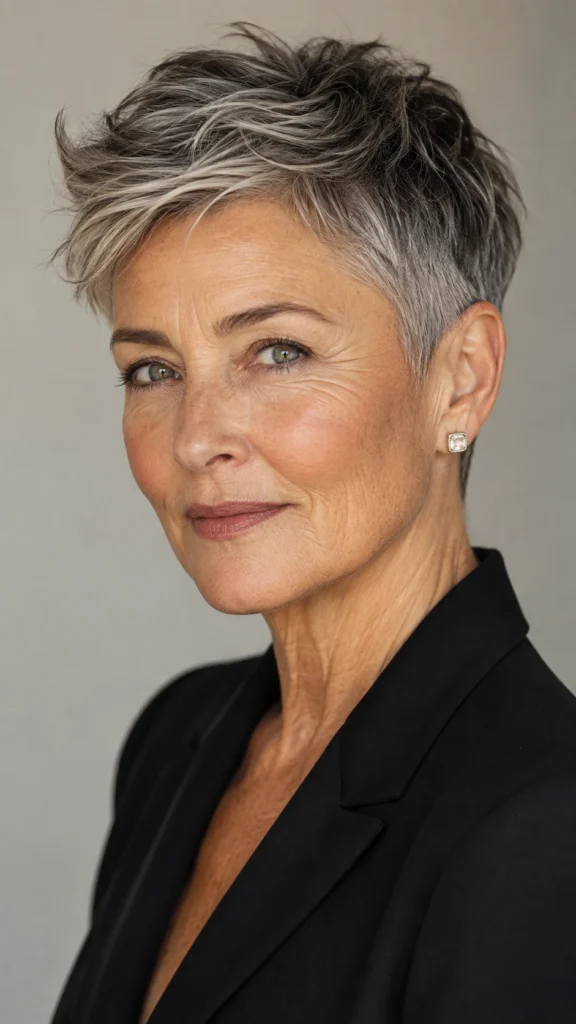
This is my answer for anyone who wants pixie level ease without going quite that short. The sides and back get cropped close, while slightly longer layers on top keep the whole shape from feeling severe. Removing that bulk at the sides concentrates whatever volume you have right at the crown, which happens to be exactly where fine hair needs it most.
Most mornings, this cut needs nothing more than a small amount of texturizing cream worked through with your fingers. It’s about as close to effortless as haircuts get.
Which of these fits your everyday routine and your budget best?
11. The Side Parted Pixie with Crown Lift
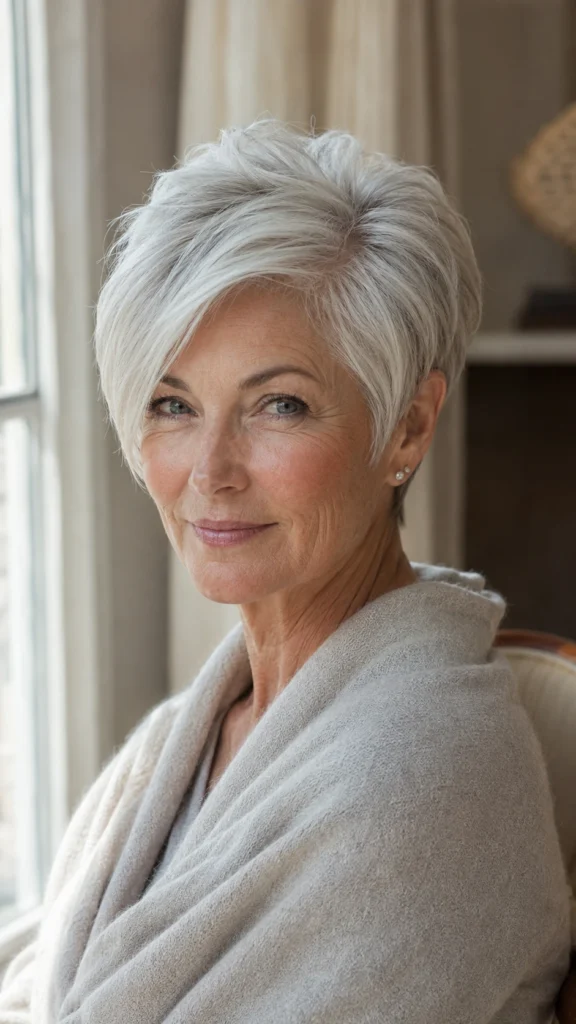
I reach for this one specifically when a client is starting to notice thinning near the hairline and wants a cut that works with that reality instead of ignoring it. According to the Cleveland Clinic, hormonal changes after menopause frequently cause hair to thin along the center part and frontal hairline. Short crown layers get styled upward for lift exactly where it’s needed, and a deep side part helps disguise any sparse areas near the part line. Tapering the back and keeping the sides close to the head gives the whole thing a tailored, neat feel.
A few reasons this cut earns its spot on my list:
- Styling takes only a few minutes most mornings
- The deep side part adds structure and camouflage where it counts
- It suits straight or slightly textured fine hair especially well
12. The Silver or Gray Crescent Bob
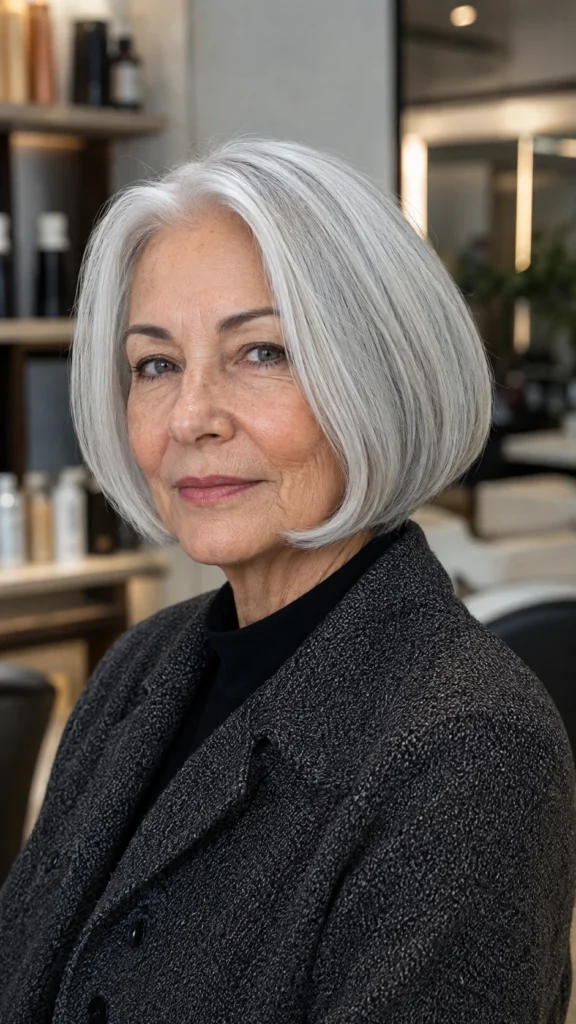
There’s something about a clean, symmetrical bob on natural gray or silver hair that just reads expensive, even when the styling routine behind it is anything but complicated. The curved silhouette frames the face beautifully, especially if your face shape runs longer or slimmer, and it holds its polish with genuinely minimal daily effort.
One thing I always mention to clients going this route is that dryness and frizz tend to show up more at the ends with gray hair, so a lightweight leave in becomes non negotiable rather than optional.
13. The Choppy Jagged Bob
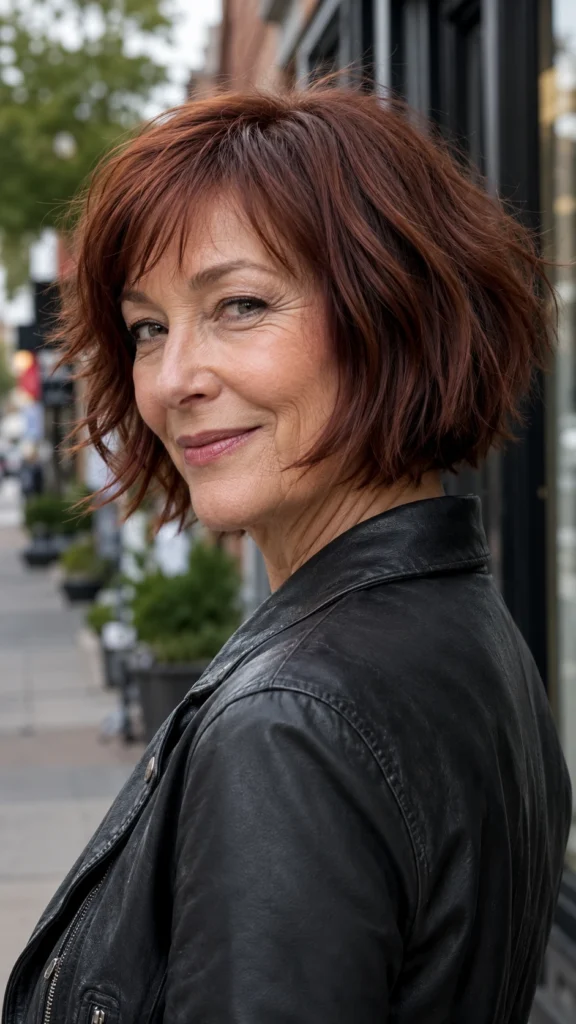
This one is for the client who wants texture without committing to a full shag, and it’s become one of my most requested cuts for exactly that reason. Big, textured layers cut throughout give fine hair movement and a lived in feel that a smooth, blunt bob just doesn’t offer. It photographs beautifully too, which my clients who are active on social media always appreciate.
A few honest notes before you book this one:
- Works best on straight to slightly wavy textures
- You can use a flat iron at home for loose, beachy waves if you want variety
- The choppier the layers, the more product you’ll need to keep them separated
14. The Wispy Fringe Crop
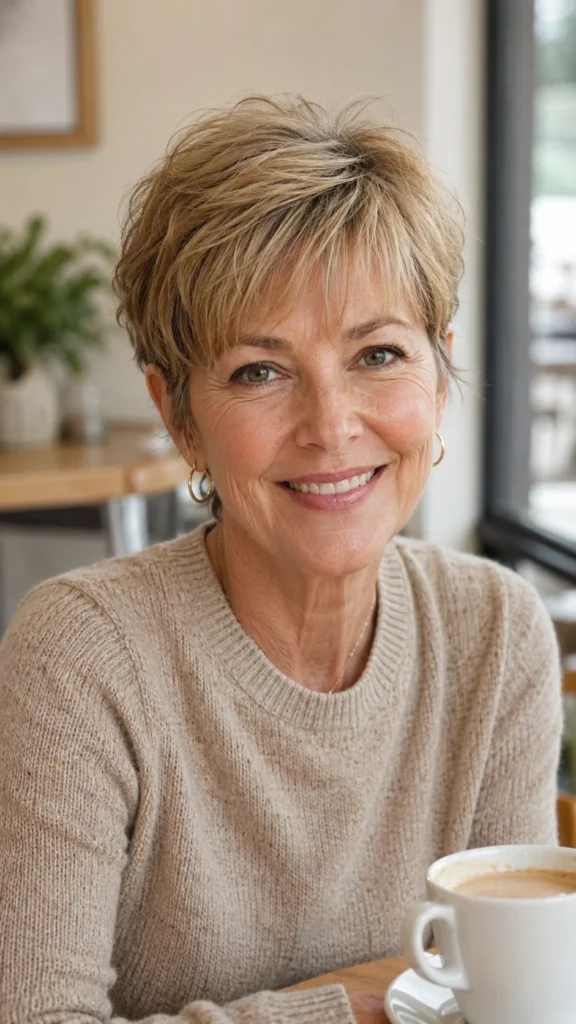
Rounding out my list is a short, wispy crop with a soft fringe, and it’s exactly the wash and wear style it sounds like. Feathered layers throughout distribute whatever volume you have evenly across your head, so you avoid both the flat look and the overly severe short hair vibe some crops can fall into. A gentle fringe softens your forehead and draws attention up toward your eyes, which is always a flattering trick regardless of your face shape.
Genuinely, a light mousse on damp hair and a quick finger styling session is all this cut asks of you. I’ve had clients tell me it’s the first haircut in years that didn’t feel like a second job.
Alright, tell me, which cut is calling your name and why?
Top 6 Low Maintenance Hairstyles for 60 Year Old Woman With Fine Hair
| Look / Item | Estimated Price | Care Level | Where to Buy |
|---|---|---|---|
| Wash and Wear Bob (root mousse) | Under 15 dollars | Low | Amazon |
| Soft Pixie (texture paste) | Under 20 dollars | Low | Amazon |
| Tapered Lob (heat protectant spray) | 15 to 25 dollars | Medium | Amazon |
| Modern Shag with Curtain Bangs (texturizing spray) | 18 to 28 dollars | Medium | Amazon |
| Silver or Gray Crescent Bob (lightweight leave in) | 12 to 22 dollars | Low | Amazon |
| Wispy Fringe Crop (finishing mousse) | Under 18 dollars | Low | Amazon |
Your Quick Cut Cheat Sheet
By Budget
Budget Friendly Picks
- Soft Pixie, just texture paste from Amazon and you’re set
- Wash and Wear Bob, root mousse is the only real cost
- Wispy Fringe Crop, one finishing mousse does it all
Worth the Splurge
- Silver or Gray Crescent Bob, invest in a proper lightweight leave in
- Modern Shag with Curtain Bangs, a good texturizing spray makes or breaks this cut
- Tapered Lob, a quality heat protectant pays off long term
By Lifestyle
Busy Mornings, No Time to Spare
- Soft Pixie
- Tapered Crop
- Wispy Fringe Crop
Humid or Hot Climates
- Textured Crop
- Side Parted Pixie with Crown Lift
- Choppy Jagged Bob
Want to Wear It Up Sometimes
- Layered Lob
- Grown Out Pixie or Shixie
Polished, Low Fuss Office Look
- Wash and Wear Bob
- Silver or Gray Crescent Bob
Frequently Asked Questions
What is the easiest hairstyle for a 60 year old woman with fine hair?
I usually recommend the wash and wear bob or the soft pixie. Both are cut with enough structure to look full straight out of the shower, so you’re not stuck blow drying every single morning.
What haircuts should women over 60 with fine hair avoid?
The best rule is to steer clear of long, one length hair past the shoulders and heavy razor cut layers. Both drag fine hair flat and end up making it look thinner than it actually is.
How often should fine hair be trimmed after 60?
Every six to eight weeks for most shorter cuts keeps the lines sharp and intentional. Longer, more forgiving shapes like the lob can sometimes stretch a bit further between visits.
Can fine hair be low maintenance and still look full?
Absolutely, and this is the thing most women don’t believe until they see it. The fullness comes from a precise cut and a little crown lift, not from an hour spent styling every day.
Does hair color really make fine hair look thicker?
Yes, dimensional color does a lot of heavy lifting here. Soft balayage or subtle lowlights break up flat, single tone hair and trick the eye into seeing more depth and body.
Conclusion
Your hair doesn’t need more time—it needs the right shape to do the work for you. These cuts prove that low maintenance and gorgeous can go hand in hand. Pick the one that fits your routine and feels like you, then bring a photo to your stylist for inspiration. A little texture, the right layers, and a flattering shape can make fine hair feel instantly more lively. You deserve a style that looks polished without demanding hours of effort. Which one can you already picture yourself wearing?
