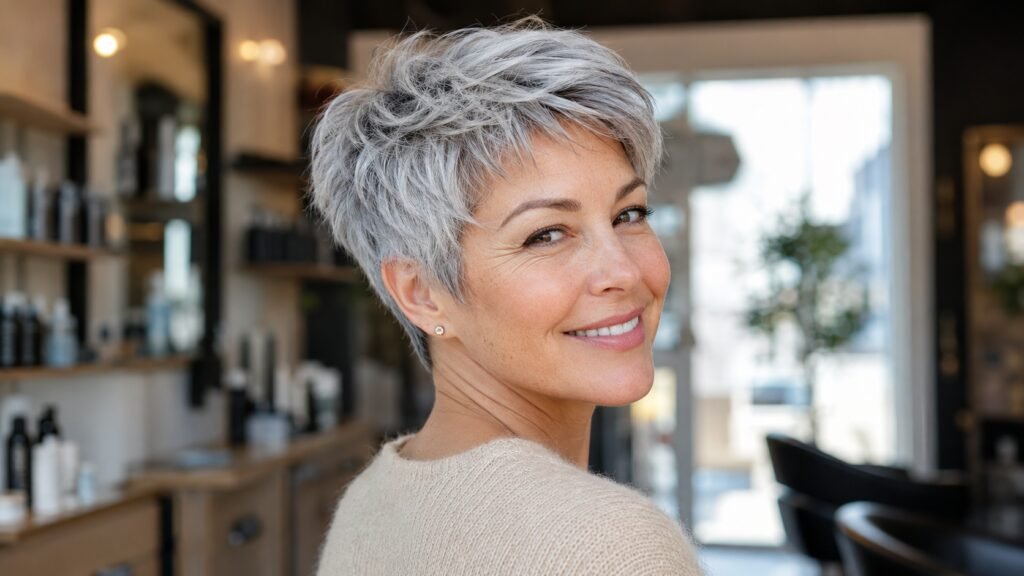
Short Pixie Cut Ideas for Women Over 50 can be the perfect way to break out of the same tired ponytail routine every morning. I’ve watched dozens of my clients sit in my chair convinced that short hair only works on twenty-five-year-olds with perfect bone structure, and every single time, I get to prove them wrong. A great pixie cut does something no serving of concealer or contouring ever could: it lifts your whole face, shows off your cheekbones, and somehow makes getting ready take five minutes instead of forty-five. If you’re on the fence, these eighteen ideas are here to show you exactly why this cut might be the best decision your hair has made in years.
My Styling Notes
I’ll never forget the client who almost bolted from my chair mid cut. She was in her mid fifties, had worn the same shoulder length blowout for twenty years, and finally decided she was ready for a pixie. About halfway through, watching all that hair land on my salon floor, she froze and asked me to stop. I could see the panic setting in, so I talked her through it, reminded her why we started, and finished the cut soft and full instead of severe for her first week.
By the time she left, she was taking selfies in the parking lot, and I loved every second of it. Six weeks later she came back for her trim and told me two strangers had stopped her that week just to ask who did her hair. That’s the moment I remind every nervous client about now. The fear right before the cut is real, but so is the confidence waiting on the other side of it.
18 Effortless Ways to Master Chic Short Pixie Cuts After 50
1. Why Pixie Cuts Are Having a Real Moment After 50
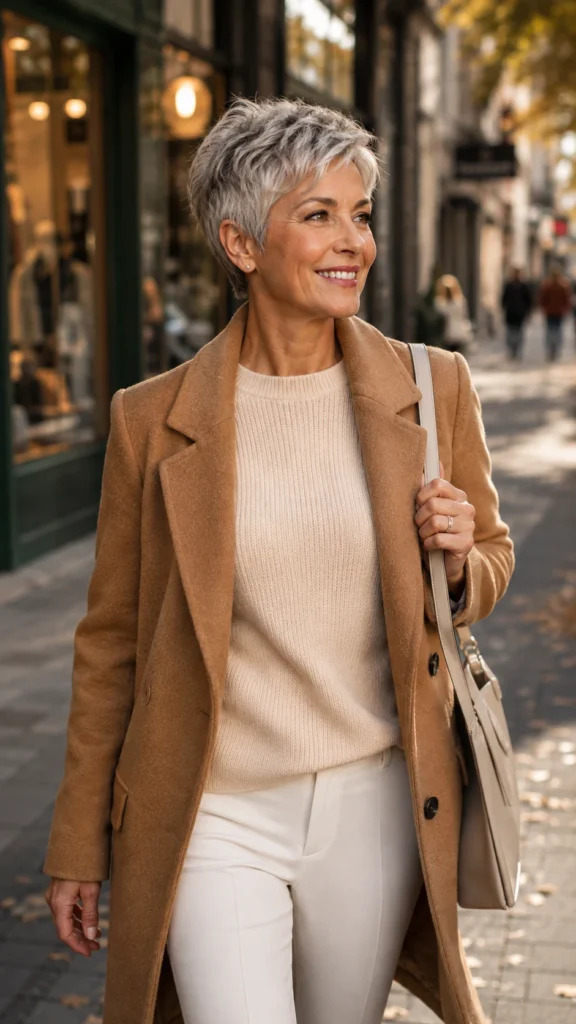
Something shifted in the last few years, and I’ve watched it happen right in my own chair. Women who once swore they’d never go short are walking in with photos saved on their phones, ready to commit.Part of it is confidence, part of it is simply being tired of the daily routine, and part of it is watching iconic women make the classic Pixie cut look like the most powerful choice in the room. One thing I always tell my clients is that a pixie isn’t about giving something up. It’s about finally putting the focus on your face instead of hiding behind length that stopped working for you years ago.
2. First, Is a Pixie Actually Right for You
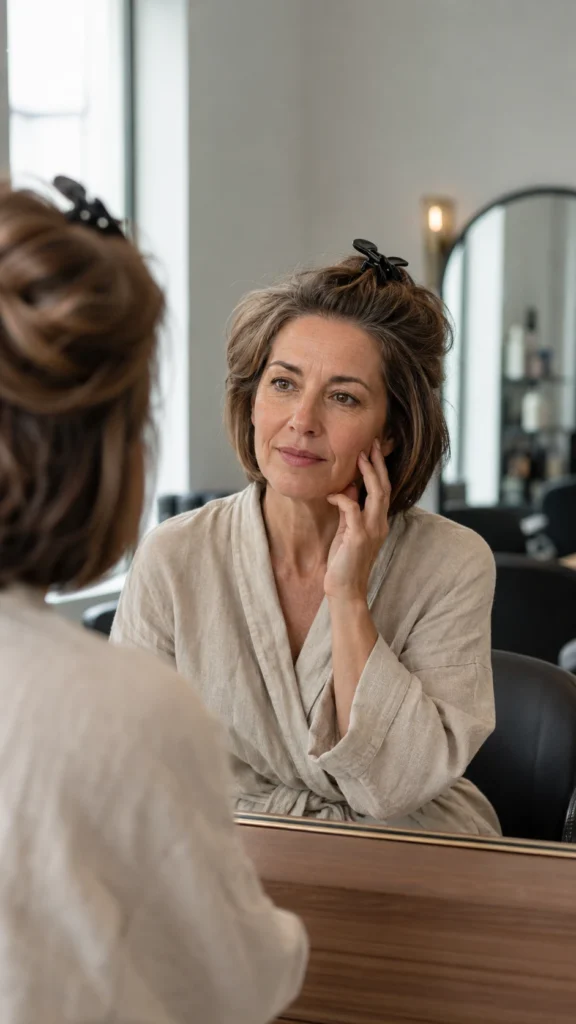
Before we get into styles, let’s have an honest conversation. Not every face, lifestyle, or hair type is going to love a pixie the same way, and any stylist who tells you otherwise is just trying to sell you a haircut.
Ask yourself these questions before you book the appointment.
- Do you actually enjoy your face being the center of attention, or do you use length to hide?
- Are you dealing with any thinning at the crown that a longer cut might disguise better?
- Do you have the five minutes a day it takes to style short hair, even though that’s genuinely all it takes?
If you answered yes to the first and third, you’re probably ready. The second one just means we pick the right texture together.
3. The Classic Textured Pixie
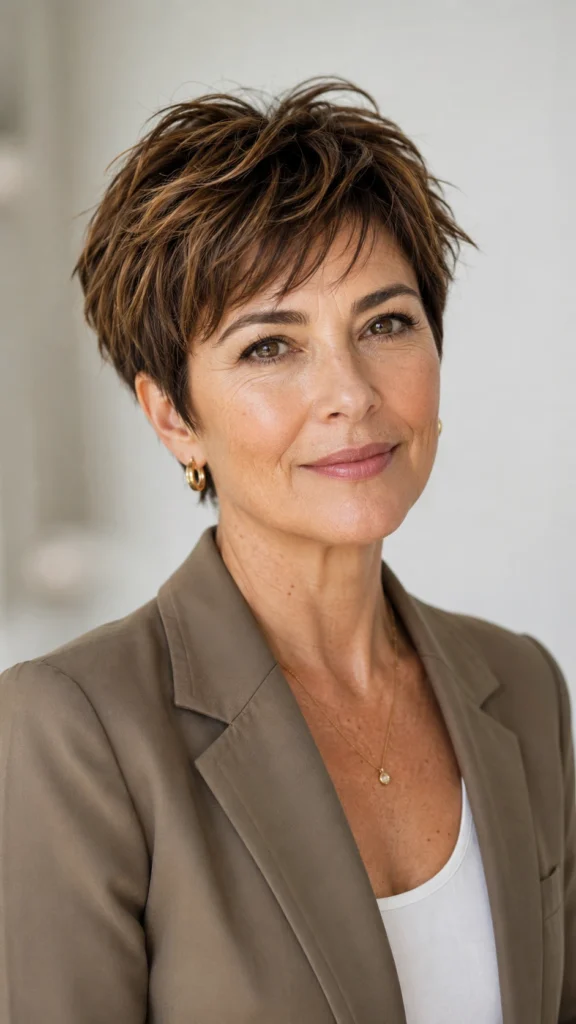
This is the one I recommend most often, and for good reason. Soft, choppy layers throughout give you movement without ever looking overdone, and it works beautifully on fine to medium hair. A quick trick I’ve learned is that a tiny bit of texturizing paste rubbed between your palms and scrunched through damp hair does more work than any amount of blow drying ever will. It flatters oval and heart shaped faces especially well, softening the whole look while still keeping that fresh, polished edge.
4. The Long Pixie or Grown Out Bixie
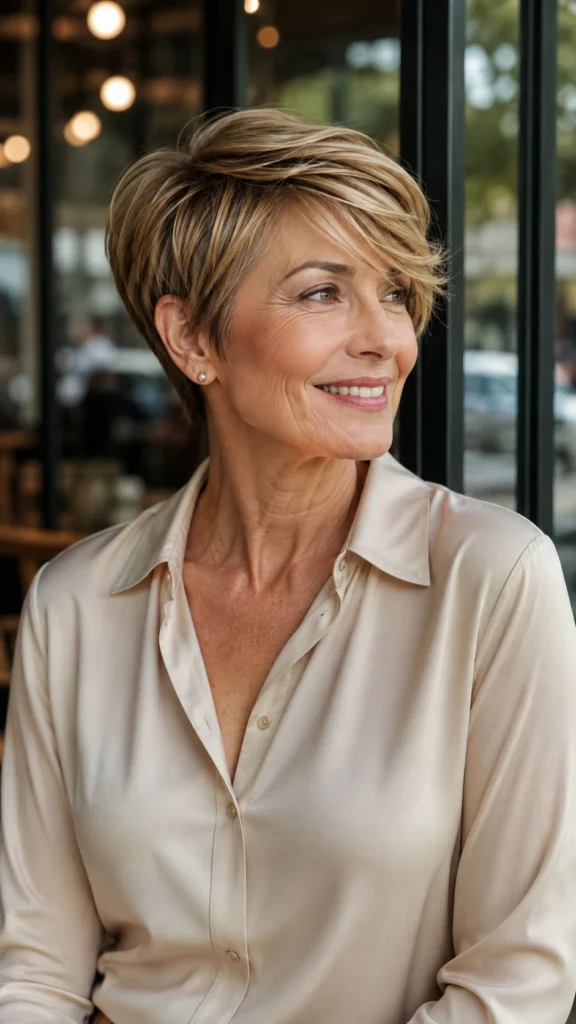
If the idea of going full pixie makes your stomach drop a little, this is your landing pad. It gives you almost all the lightness and ease of a true pixie, but with just enough length on top to tuck behind your ears or sweep to the side on a low effort day.
I always tell nervous first timers to start here.
- It’s easier to grow out if you change your mind
- It photographs beautifully in both sleek and tousled versions
- It gives your stylist more to work with while your confidence catches up
5. The Silver Fox Pixie
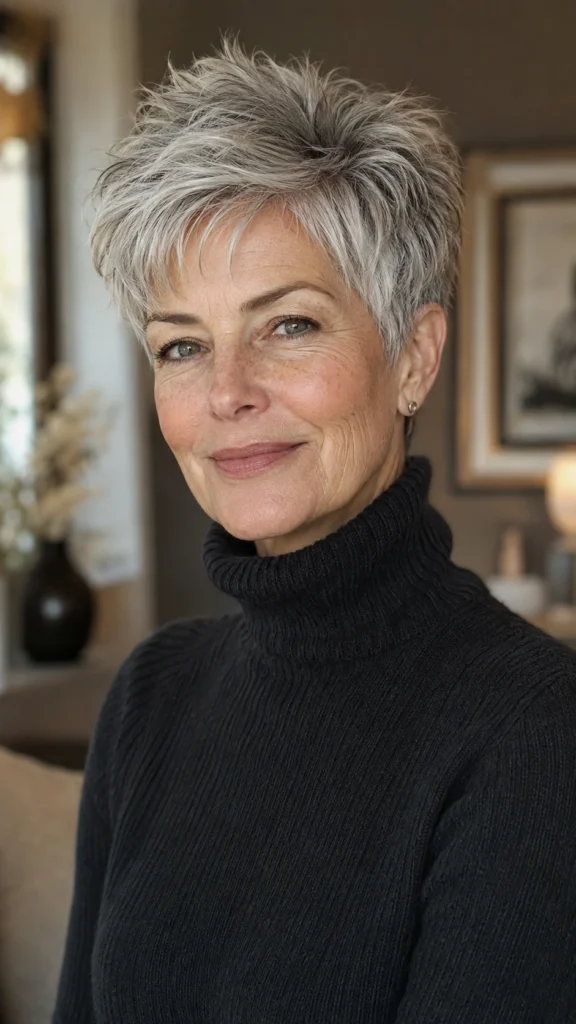
There is nothing quite like watching a woman embrace her natural silver and finally stop fighting it. This cut leans into grey and white tones with a shape that adds volume right where fine, aging hair tends to lose it most, especially through the crown. I’ve had more than one client cry happy tears in my chair the first time she saw herself with silver hair styled well instead of just left to grow out awkwardly. Pair it with a slightly longer top for movement, and honestly, it reads as confident rather than tired in a way people don’t expect until they see it on themselves.
6. The Choppy Shag Pixie
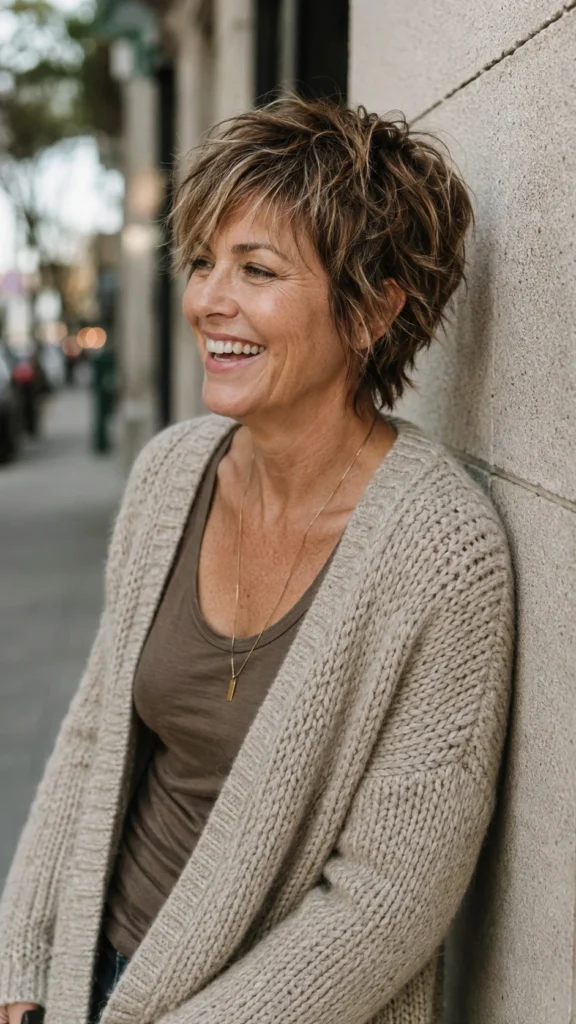
Texture is doing all the heavy lifting here. Uneven, piecey layers throughout the crown and sides create the illusion of thickness even if your hair has gotten finer over the years, which, let’s be honest, happens to almost everyone eventually. It’s a forgiving cut that hides a multitude of bad hair days under its own controlled chaos.
One thing I always tell my clients is that this style actually looks better a little undone, so resist the urge to overbrush it into submission.
7. The Side Swept Fringe Pixie
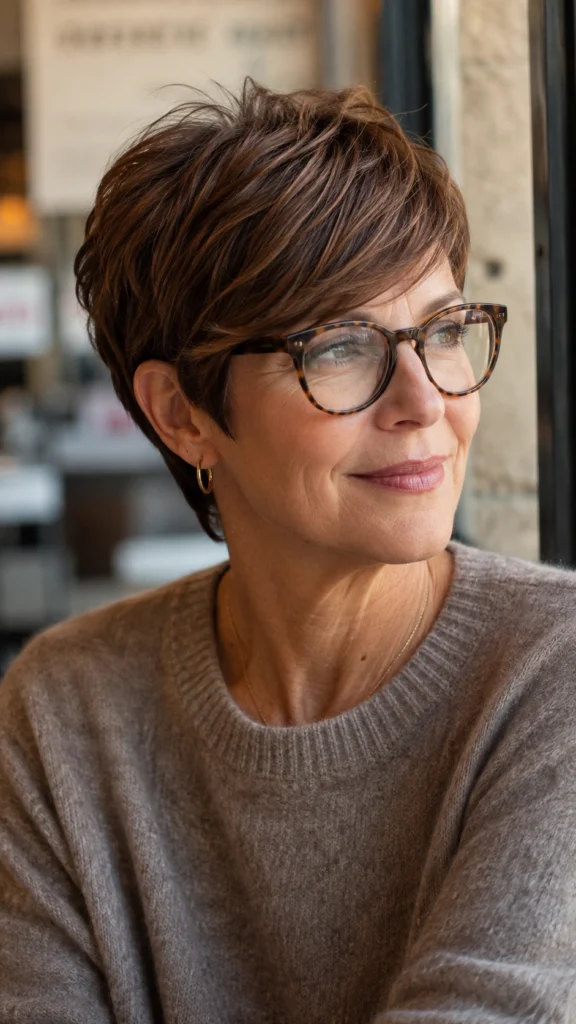
Here’s a gap nobody talks about enough. If you wear glasses, and statistically most of us do by our fifties, a side swept fringe is going to be your best friend. If you want more inspiration on framing your face, check out these popular pixie with bangs hairstyles for women over 50. It softens the transition where your frames meet your forehead… instead of competing with them the way a blunt, straight across fringe often does.
- Works with both reading glasses and daily frames
- Softens a longer or angular face shape beautifully
- Styles in under two minutes with just a round brush
I genuinely think this is the most underrated pixie variation out there, glasses or not.
8. The Undercut Pixie
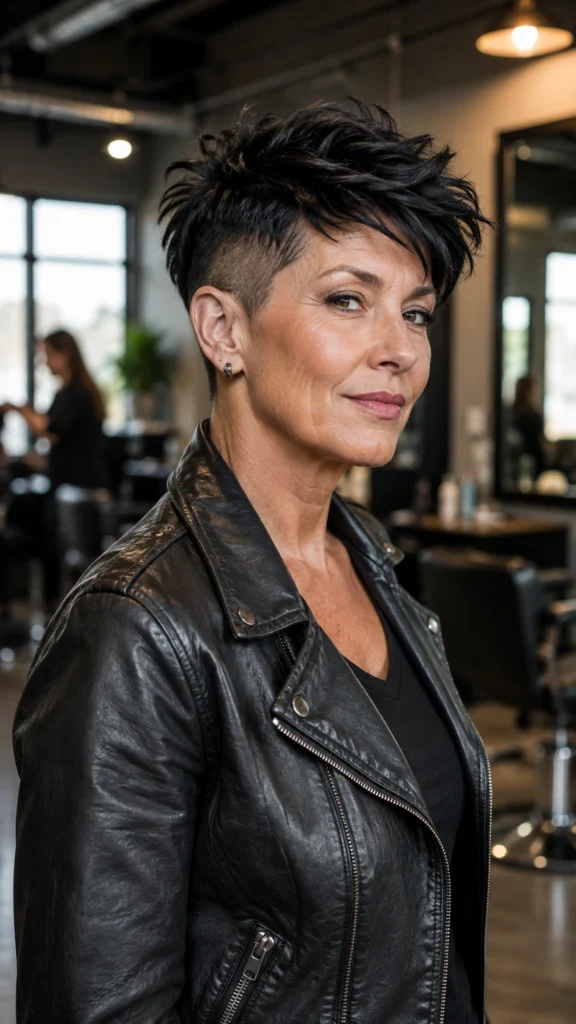
This one is bold, and I won’t pretend otherwise. Shaved or closely cropped sides and back paired with longer, textured length on top creates a sharp contrast that reads as modern in a way few other cuts can match. It’s not for everyone, and that’s actually the appeal. Women who choose this are usually done asking for permission to look exactly how they want. It suits oval and heart shaped faces especially well, though I’ll admit it takes a certain amount of confidence to walk out of the salon the first time.
Okay, be honest, which pixie style would your stylist be shocked to see you walk in and ask for?
9. The Curly or Wavy Pixie
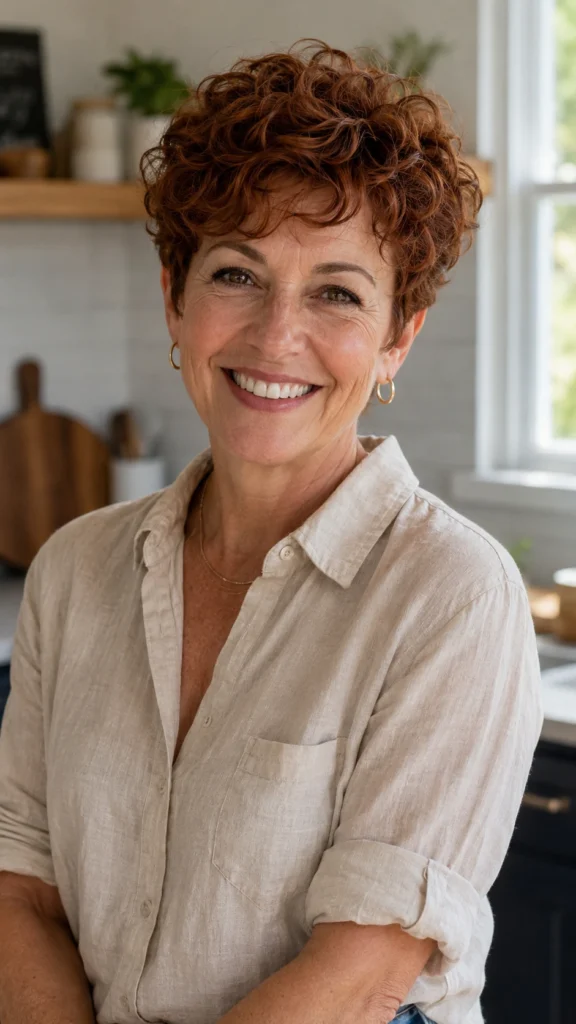
Curly hair gets short changed in almost every pixie article I’ve read, so let’s fix that. Curls need length to actually form a shape rather than just puffing straight out, which means going too short too fast is where most curly pixie disasters happen. I always tell curly haired clients to leave a little more length on top than they think they want, at least at first.
A few things that make curly pixies genuinely work well.
- Ask for a dry cut so your stylist can see exactly how each curl falls
- Use a diffuser instead of air drying flat against your head
- Skip brushing when dry and finger detangle instead
Give it a few weeks to settle into its true shape before deciding you hate it.
10. Pixie Cuts and Glasses What Actually Works
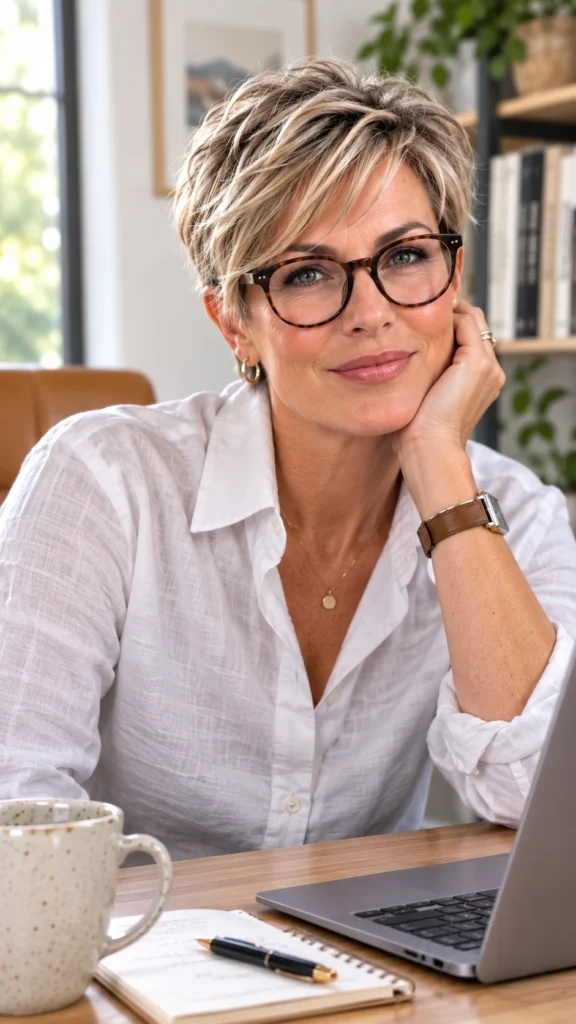
I brought this up briefly already, but it deserves its own real conversation because I get asked about it constantly. The biggest mistake I see is women choosing a cut based purely on Pinterest without considering how their frames will interact with it daily. Heavier or thicker frames pair beautifully with a pixie that has more volume and texture up top, since a flat style tends to get visually overwhelmed by bold glasses. Thin, delicate frames on the other hand can handle a sleeker cut without competing for attention. Bring your actual glasses to your consultation. It sounds obvious, but almost nobody does it, and it makes a genuine difference in the final shape.
11. The Real Cost of a Pixie Salon Budget Breakdown
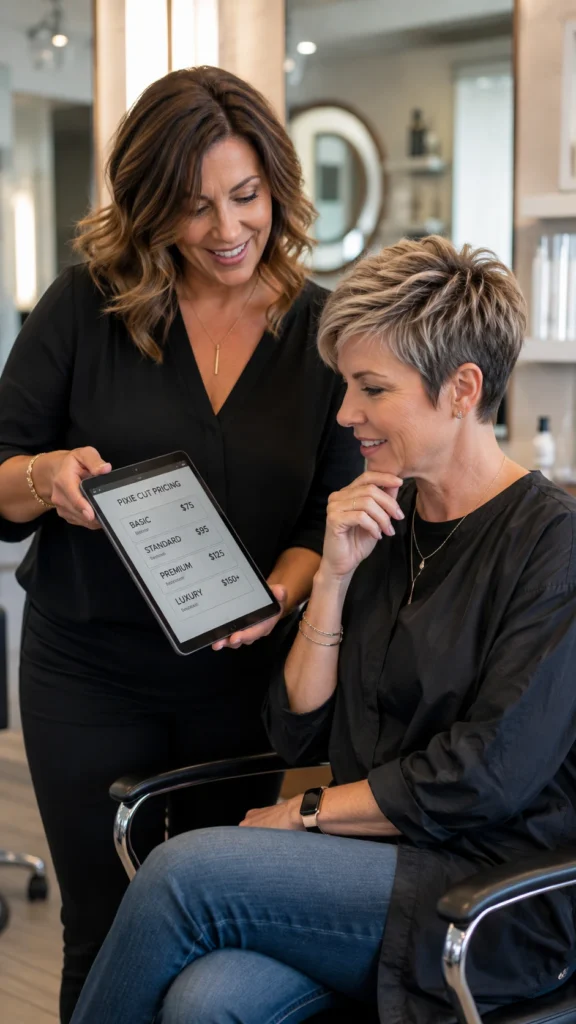
Let’s talk money, because nobody else seems willing to. A quality pixie cut at a full service salon typically runs anywhere from sixty five to one hundred and fifty dollars depending on your city, and you’re realistically looking at a trim every four to six weeks to keep the shape sharp. That adds up faster than long hair ever did, which catches a lot of women off guard.
If budget is tight, a few real options exist.
- Ask about apprentice or stylist in training days, often thirty to fifty percent off
- Stretch appointments to six weeks by keeping length slightly longer on top
- Find one trusted colorist and one trusted cutter rather than chasing trends around town
It’s a real cost, but for most of my clients, it’s one they say is worth every dollar once they see the payoff.
12. Surviving the Awkward Grow Out Phase Weeks Four to Eight
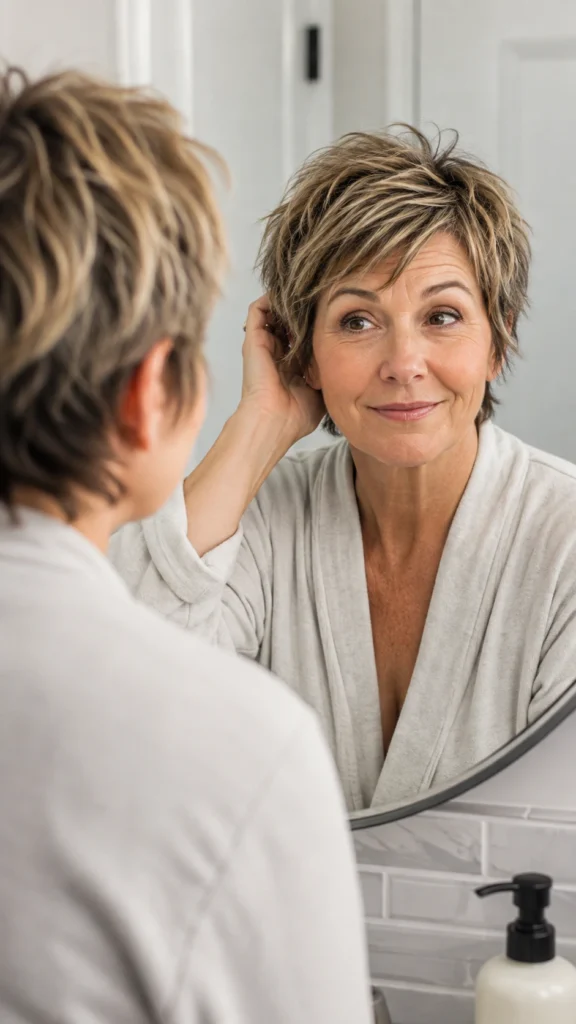
Nobody warns you about this part, and I think that’s a disservice. Somewhere around week four, your pixie stops looking crisp and starts looking like it’s having an identity crisis, and this is exactly when most women panic and book an emergency appointment to chop it all off again.
Here’s what I tell every client heading into this stretch. A little dry texture spray and some patience go a long way, and pushing the sides back with your fingers instead of fighting them can actually look intentional rather than messy. This phase is temporary, and honestly, some of the coolest, most lived in pixie looks I’ve ever created happened right in the middle of this so called awkward stretch.
Between budget friendly and worth the splurge, which pixie routine actually fits your life right now?
13. Your Three Product Starter Kit
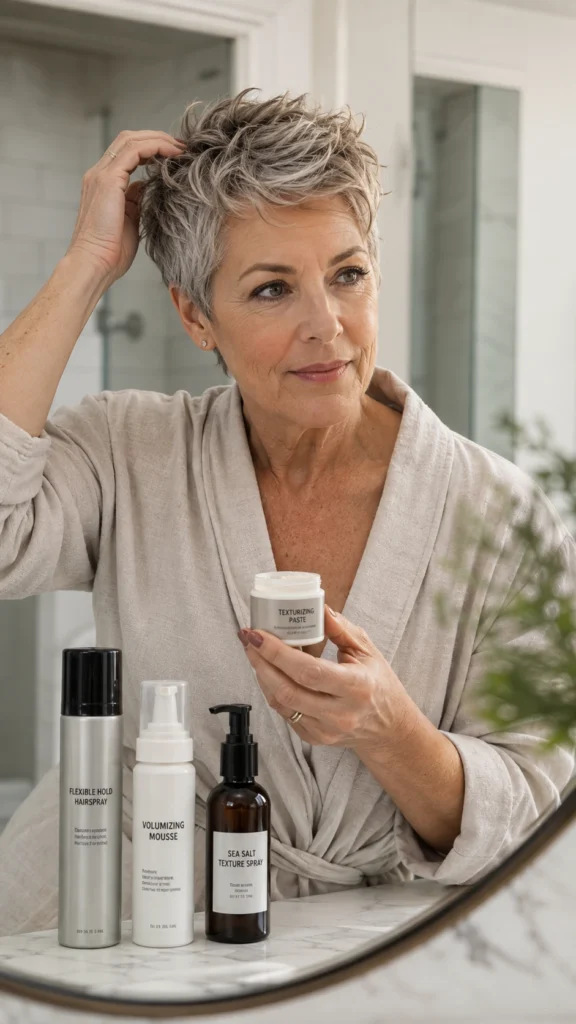
Walking into a beauty supply store after getting a pixie can feel completely overwhelming, so let’s simplify it. You genuinely only need three things to style a pixie well, and I say this to every single client who leaves my chair looking lost in the product aisle.
- A texturizing paste or wax for definition and piece control
- A lightweight volumizing mousse to use on damp hair before drying
- A small amount of dry shampoo, because short hair actually shows oil faster at the roots than long hair does
Skip the twelve step routine you might have used before. Short hair rewards simplicity in a way long hair never did.
14. Styling for Humidity Heat and Real Weather
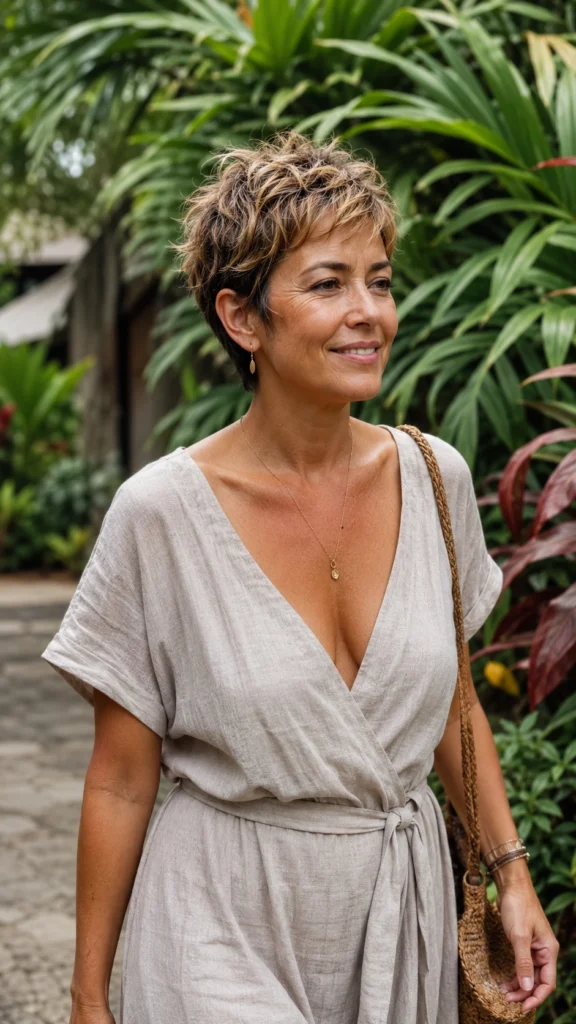
Where you live changes everything about how your pixie behaves, and I wish more articles said this plainly. A pixie in humid places like Miami or Houston is going to want to frizz and expand no matter how much product you use, while the same cut in a dry climate like Phoenix or Denver tends to stay flatter and needs a bit more volumizing help instead.
For humid climates, lean into the texture rather than fighting it with anti frizz serums that mostly just sit on top of the problem. For dry climates, a hydrating leave in spray before styling makes a noticeable difference. Either way, know your own weather before you know your product routine, because the two are more connected than most people realize.
15. Pixie Cuts That Survive Sleep Sweat and Real Life
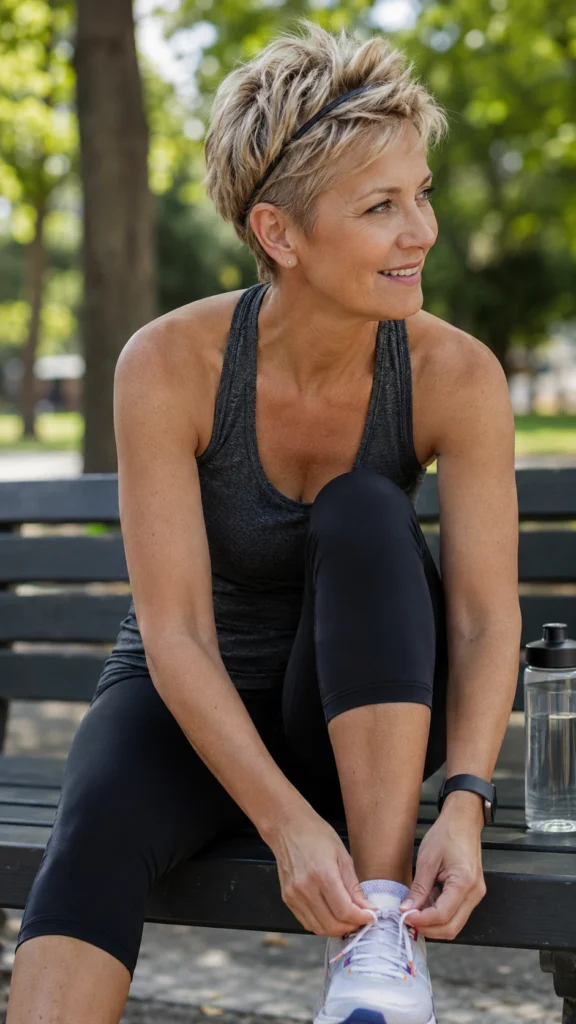
Here’s something almost nobody addresses honestly. Short hair shows bedhead in a way long hair simply hides, and waking up with one side flattened and the other sticking straight up is a very real part of pixie life that catches people off guard the first few mornings.
A silk or satin pillowcase reduces a surprising amount of that morning chaos. For workouts, a light headband keeps shorter pieces off your face without leaving a dent, and if you swim regularly, rinsing with fresh water immediately after chlorine exposure protects both your color and your texture. None of this is complicated, it just takes knowing the tricks nobody bothers to mention upfront.
16. Color Talk Grey Blending and Root Reality on Short Hair
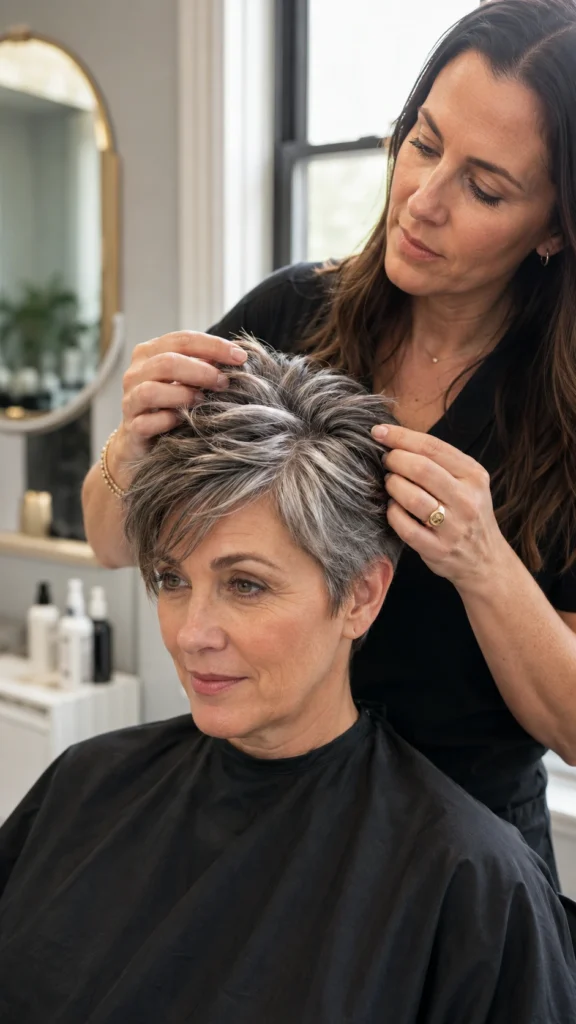
I need to be honest with you about something most colorists gloss over. Roots show up faster and more obviously on short hair simply because there’s so much less length to disguise the growth, which means your touch up schedule is probably going to be tighter than you’re used to.
IIf you’re blending grey rather than covering it fully, ask your colorist about modern gray blending for older women to mimic natural regrowth instead of a solid single process color. It stretches your appointments out considerably and looks more intentional as it grows. One thing I always tell my clients going silver or grey is that the transition period tests your patience, but a well blended pixie makes that in between stage look like a deliberate style choice rather than an accident.
17. The Emotional Side What Cutting It All Off Really Feels Like
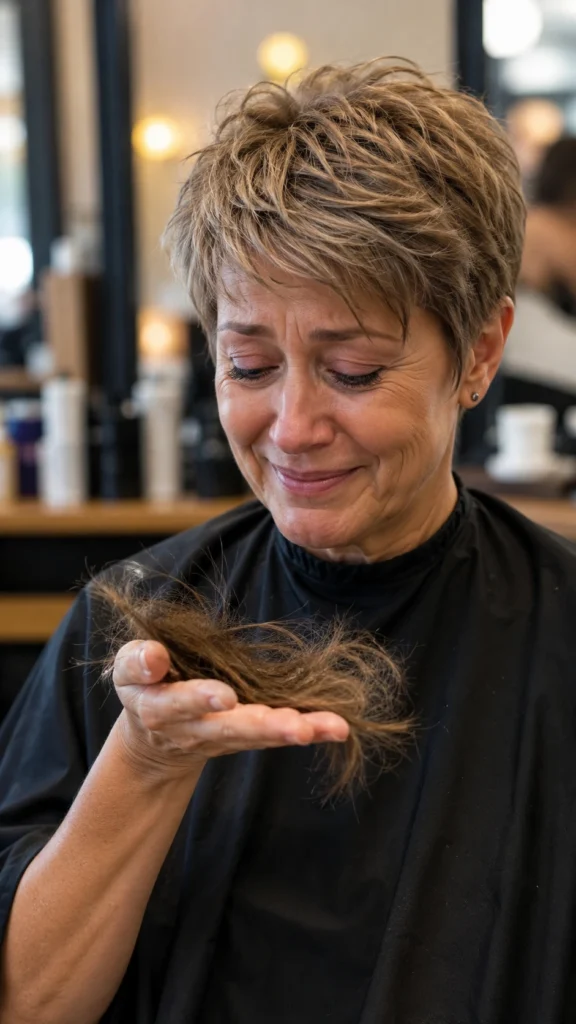
I don’t think enough people talk about this part, and I probably should have said it earlier. Cutting off hair you’ve had for twenty or thirty years is not just a haircut, it’s genuinely an identity shift, and I’ve watched grown women cry in my chair over it more times than I can count.
That reaction doesn’t mean you made the wrong choice.
- It usually means the hair was tied to a version of yourself you’re ready to move past
- Grief and excitement can show up at the exact same time, and that’s completely normal
- Most women tell me the fear fades within a week, and confidence takes its place
If you’re feeling nervous about this decision, that’s not a sign to stop. It’s just a sign that it actually matters to you.
18. Final Styling Cheat Sheet and How to Talk to Your Stylist
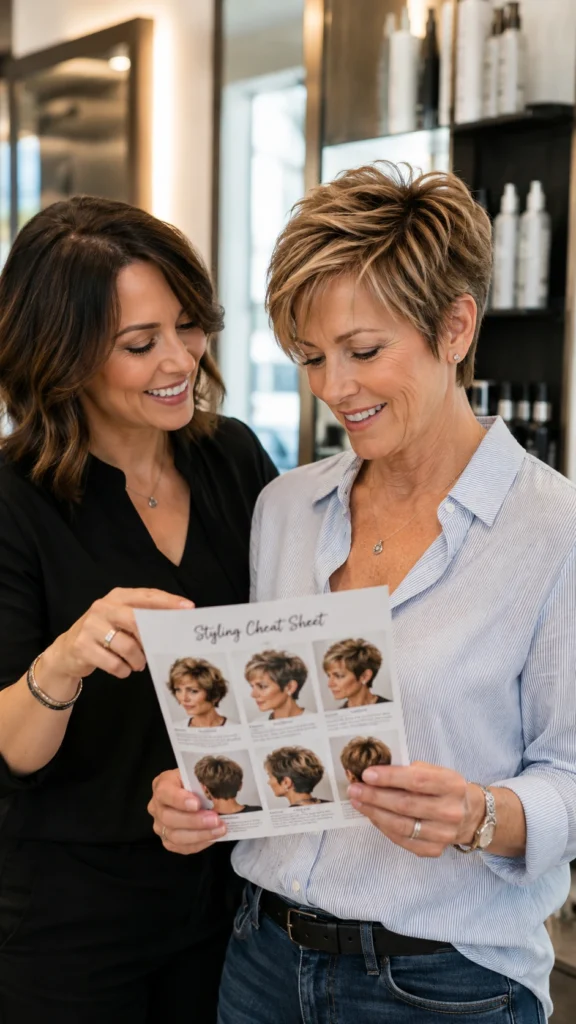
Understanding the evolution of short hairstyles can give you the confidence to own your transformation…After all these ideas, here’s how to actually walk into your appointment prepared instead of just hoping for the best. Bring photos, but also bring your glasses, your typical morning schedule, and an honest answer about how much daily styling time you’re really willing to give this.
Which of these eighteen pixie looks is calling your name first?
A simple script I recommend to clients before their consultation goes something like this. Tell your stylist your hair type, your face shape if you know it, how often you’re realistically willing to visit for trims, and any past haircuts you loved or hated and why. That last part matters more than people think, because it tells your stylist exactly what to avoid repeating. A great pixie isn’t something that happens to you in the chair, it’s something you build together, one honest conversation at a time.
Top 6 Short Pixie Cut Ideas for Women Over 50
| Look / Item | Estimated Price | Care Level | Where to Buy |
|---|---|---|---|
| Classic Textured Pixie (texturizing paste) | Under 25 dollars | Low | Amazon |
| Silver Fox Pixie (purple toning shampoo) | Under 20 dollars | Medium | Amazon |
| Choppy Shag Pixie (matte finish wax) | Under 20 dollars | Low | Amazon |
| Side Swept Fringe Pixie (round styling brush) | Under 15 dollars | Low | Amazon |
| Undercut Pixie (precision trimmer for touch ups) | 30 to 60 dollars | Medium | Amazon |
| Curly Pixie (diffuser attachment) | Under 25 dollars | Medium | Amazon |
Your 60 Second Pixie Picker
By Budget
Budget Friendly Picks
- Classic Textured Pixie, paste and a round brush is all you need
- Choppy Shag Pixie, minimal product, maximum forgiveness
- Side Swept Fringe Pixie, one brush does all the work
Worth the Splurge
- Silver Fox Pixie, invest in a good toning shampoo from Amazon to keep brassiness away
- Undercut Pixie, a quality trimmer from Amazon keeps the shape sharp between salon visits
- Curly Pixie, a solid diffuser attachment from Amazon changes everything
By Lifestyle
Busy Professionals
- Classic Textured Pixie or Long Pixie, both style in under five minutes
Hot and Humid Climates
- Choppy Shag Pixie, leans into texture instead of fighting frizz
Active or Workout Heavy Days
- Undercut Pixie or Side Swept Fringe, both hold up under a headband or sweat
Weekend Low Effort Days
- Long Pixie or Grown Out Bixie, air dry and go
Embracing Natural Grey
- Silver Fox Pixie, built specifically for this transition
Frequently Asked Questions
What is the most flattering pixie cut for a woman over 50?
I usually recommend the classic textured pixie for most first timers. It softens the face, adds volume where fine hair tends to fall flat, and works on nearly every face shape without much fuss.
Will a pixie cut make me look older or younger?
Younger, almost always, when it’s cut correctly. A pixie lifts the face and draws attention up toward your eyes and cheekbones instead of pulling everything downward the way limp, longer hair often does on aging hair.
How often do I need to get my pixie cut trimmed?
Plan on every four to six weeks if you want the shape to stay sharp. Stretching much past six weeks usually means the style starts losing its structure, especially around the neckline and sides.
Can I get a pixie cut if I have thin or fine hair?
Yes, and honestly it’s one of the best cuts for fine hair specifically. The shorter length removes the weight that flattens fine strands, which creates the appearance of much thicker, fuller hair.
Do pixie cuts work for curly or wavy hair types?
They do, but the approach is different than for straight hair. I always tell curly clients to leave slightly more length on top so the curls have enough room to actually form their natural shape instead of just puffing outward.
Conclusion:
Fifty is not the finish line for great hair, it’s honestly where the fun starts, and I’ve watched enough women transform in my chair to know that a great pixie can shift how you carry yourself in ways that have nothing to do with hair at all. You don’t need to book the cut tomorrow if you’re not ready, but pull one product from that starter kit, or bring one photo to your next appointment and just ask your stylist what they think. That small first step is usually all it takes. So tell me, which one of these eighteen styles has you tempted to finally book the chair?

2 thoughts on “18 Short Pixie Cut Ideas for Women Over 50 to Try”