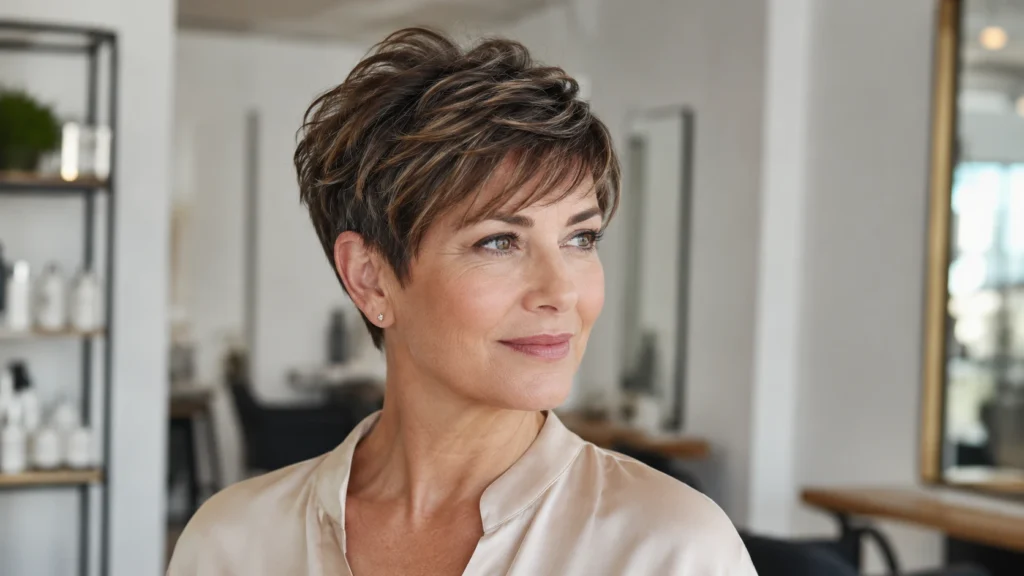
A pixie cut is one of the most iconic, versatile, and timeless short hairstyles in fashion history, but what is a pixie cut, exactly, and what makes it so popular? From soft, feathered layers to bold, edgy undercuts, the pixie haircut offers a refreshing balance of low maintenance and chic sophistication. Whether you are considering a dramatic hair transformation or looking for ways to refresh your existing short hair, this ultimate guide covers everything you need to know about pixie cuts, including popular variations, face shape suitability, hair textures, daily styling, and maintenance.
What Is a Pixie Cut?
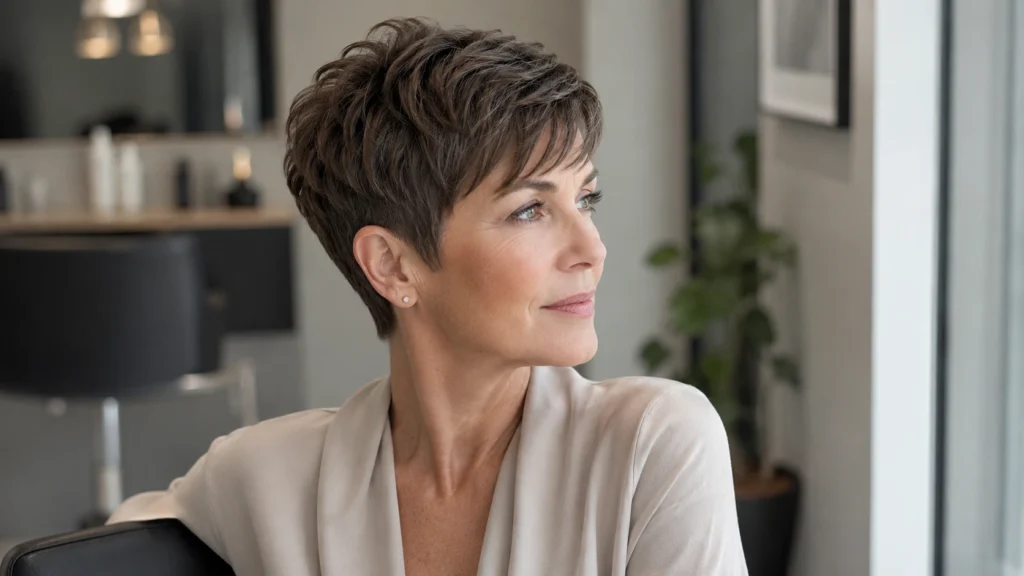
A pixie cut is a short haircut typically cropped close to the sides and back of the head, with slightly longer strands left on top. Traditional pixie cuts often feature short bangs or fringe styled to the side or swept forward, framing the face and drawing attention to features such as the cheekbones, eyes, and jawline. First popularized by 1950s cultural icons like Audrey Hepburn as noted in Vogue’s history of short hair the style remains a timeless staple.
While classic pixie cuts were known for their shorter, uniform shape, modern versions can include textured layers, a tapered nape, curtain bangs, and soft undercuts. These variations make the pixie cut easy to customize based on your face shape, hair texture, personal style, and maintenance preferences.
Key Features of a Pixie Cut
- Short Sides and Back: Hair is clipped or softly tapered around the ears and nape.
- Textured Top: Extra length on top allows for styling versatility, from sleek and polished to messy and piecey.
- Face-Framing Elements: Fringe choices, such as side-swept, micro, or wispy bangs, can be customized to complement individual face shapes.
- Low Daily Styling Effort: A pixie cut generally takes less time to dry and style than medium or long hairstyles.
Popular Types of Pixie Cuts
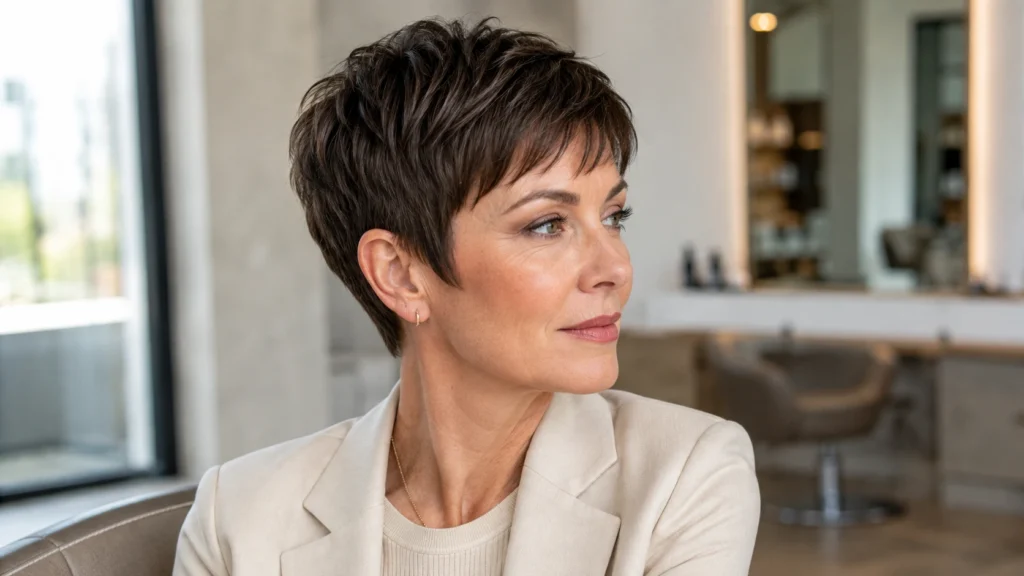
Selecting the right style depends on your preferred maintenance level, personal aesthetic, and hair density.
1. Classic Pixie Cut
The classic pixie is uniform, neat, and short all around with a soft fringe. It offers a sleek, vintage-inspired silhouette reminiscent of 1950s screen icons.
2. Pixie Cut With Bangs
Adding fringe to a cropped cut softens angular features and hides forehead lines, making it a popular choice for all ages. If you prefer a textured, effortless look, explore our guide on 15 Trendy Messy Pixie Cuts With Bangs for a Youthful Look to see how layering adds movement.
3. Long or Lixie (Long Pixie)
A “lixie” bridges the gap between a short bob and a classic pixie. It leaves 3 to 5 inches of length on top and around the front, allowing for tucking behind the ears or styling soft waves.
4. Shaggy Pixie Mullet
Combining the textured layers of a shag with the silhouette of a mullet, this edgy variation features shorter sides, a choppy top, and extended length at the nape. For inspiration on this modern hybrid style, check out 12 Edgy Shaggy Pixie Mullet Haircuts to Try.
5. Undercut Pixie
An undercut pixie features close-cropped or buzzed sides beneath longer top layers. This reduces bulk for thick hair types while creating a sharp, high-contrast look.
6. Pixie Cut for Older Women
Pixie cuts are exceptionally popular among women over 50 and 60 due to their instant face-lifting effect and capability to flatter thinning hair. For age-specific styling inspiration, explore 18 Short Pixie Cut Ideas for Women Over 50, discover elegant fringe pairings in 15 Flattering Pixie Cuts With Bangs for Women Over 50, or browse 20 Modern Short Pixie Haircuts for Older Women.
How to Choose the Best Pixie Cut for Your Face Shape
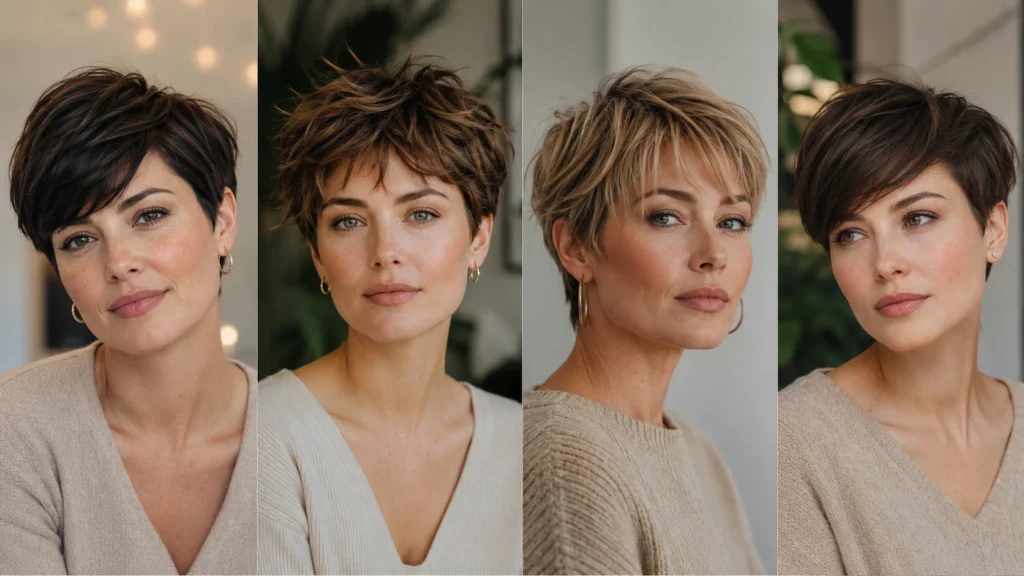
A pixie cut can be tailored to different face shapes by adjusting the amount of height, fringe length, and volume. The right combination can help balance your features while creating a shape that suits your overall look.
1. Round Face Shapes
For round faces, the goal is to create height and elongate the silhouette. Opt for cropped sides with volume on top, or asymmetrical side-swept bangs that cut across the cheekbones. Explore our specialized gallery of 15 Flattering Pixie Cuts for Round Faces That Add Height for targeted visual inspiration.
2. Oval Face Shapes
Oval faces are well-balanced and can pull off almost any pixie variation—from micro-pixies to long, textured lixies.
3. Square Face Shapes
Angular jawlines benefit from soft, wispy layers and side-parted fringe that soften sharp features while highlighting cheekbones.
4. Heart Face Shapes
Heart-shaped faces look best with side-swept bangs that draw attention to the eyes and balance out a narrower chin.
5. Styling With Glasses
Short hair frames the face, making it the perfect match for eyewear. If you wear prescription glasses or frames daily, check out 15 Chic Pixie Cuts for Women Who Wear Glasses to see how to pair frame shapes with short layers.
Pixie Cuts for Different Hair Textures
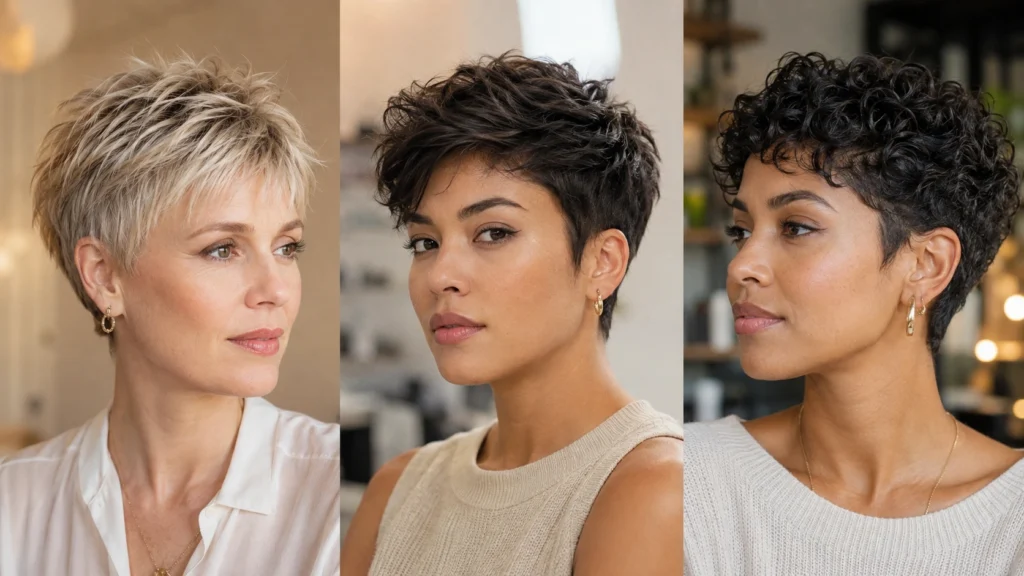
Your natural hair density and wave pattern dictate how a pixie cut will lay and perform day-to-day.
- Fine & Thin Hair: Short layers remove weight, preventing fine hair from lying flat. A choppy or piecey pixie creates the illusion of thicker, fuller locks. Browse 18 Volume-Boosting Pixie Cuts for Fine & Thin Hair for top cut choices.
- Thick Hair: Heavy density benefits from undercuts or internal texturizing techniques to remove bulk while keeping the silhouette sleek.
- Curly Hair: Natural curls add instant body and dimension to a short cut. Discover 15 Modern Pixie Cuts for Curly Hair to Enhance Texture to find curl-friendly cropped styles.
Daily Styling and Product Guide
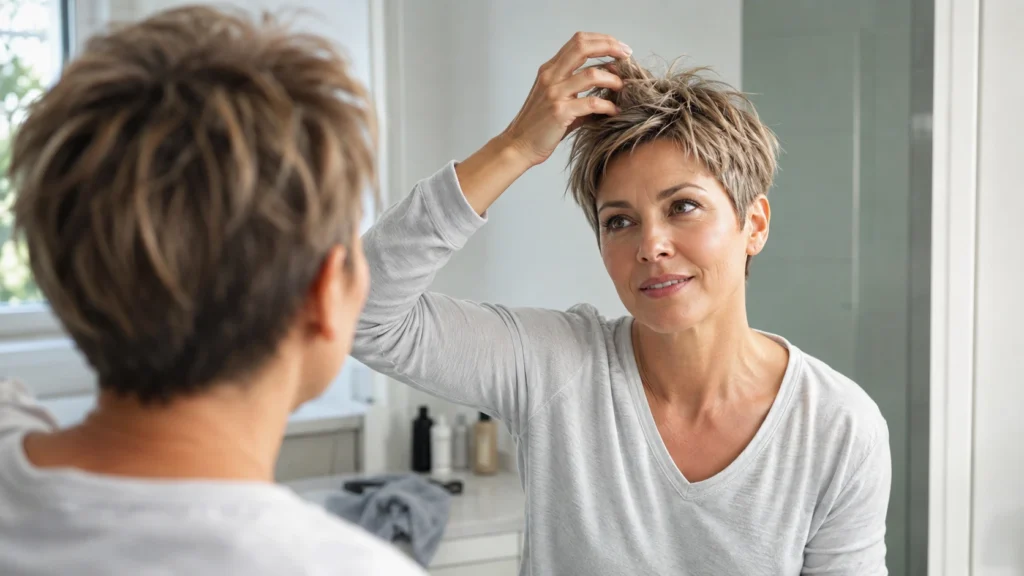
Styling a pixie cut takes significantly less time than long hair, but using the right products is key to maintaining shape and hold.
Essential Products for Pixie Cuts
- Texturizing Sea Salt Spray: Adds grip and volume to damp hair before blow-drying.
- Matte Clay or Styling Paste: Defines individual layers and provides pieciness without grease.
- Lightweight Hair Oil: Tames flyaways and adds shine to coarse or curly textures.
For a detailed step-by-step breakdown of morning routines and heat-styling techniques, read our full guide on How to Style a Pixie Cut at Home: 7 Quick Daily Techniques.
How to Grow Out a Pixie Cut Gracefully
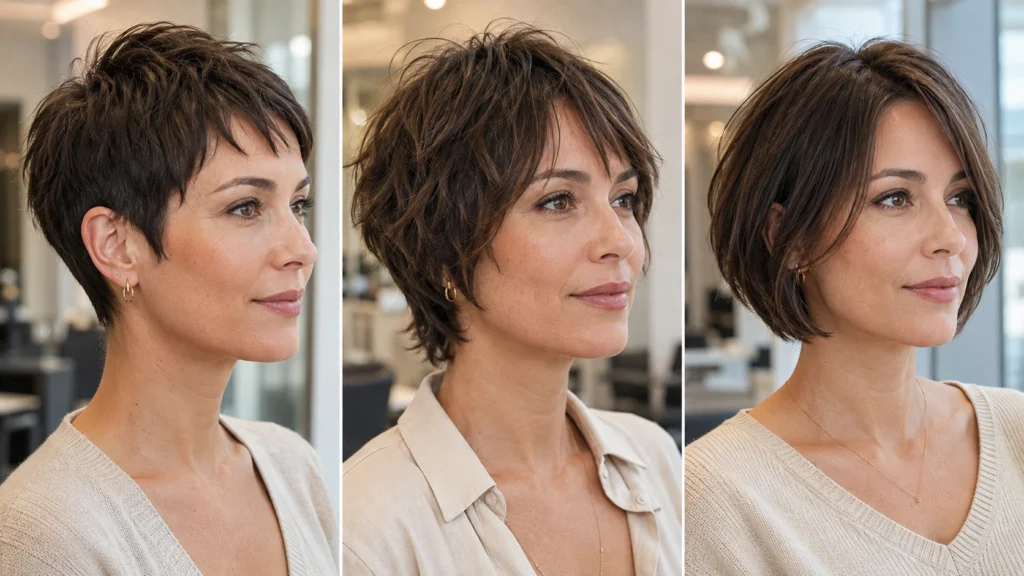
Growing out a pixie cut doesn’t have to mean dealing with awkward hair phases. With strategic trims and clever styling, you can transition smoothly from a short pixie to a bob or shoulder-length cut.
The Stage-by-Stage Growth Timeline
Months 1–3 (The Growing Pixie): Keep the back and nape trimmed while letting the top and crown layers gain length. This can help maintain a more balanced shape as the hair grows.
Months 4–6 (The Transitional Shag/Mullet Phase): Embrace textured, shaggy layers or use headbands, clips, and styling paste to sweep the hair back while the different sections catch up in length.
Months 7–9 (The Short Bob / French Bob): As the top and front layers gain enough length, your stylist can gradually reshape the cut into a short or French bob, depending on your hair length and growth pattern.
For a comprehensive month-by-month walkthrough and transition tips, check out our dedicated guide on How to Grow Out a Pixie Cut Gracefully: Stage-by-Stage Guide.
Frequently Asked Questions
What Is a Pixie Cut?
A pixie cut is a short hairstyle that is typically cropped around the sides and back while leaving more length on top. Modern pixie cuts can vary from sleek and classic to textured, shaggy, or longer styles, making them easy to customize for different face shapes and hair textures.
Are Pixie Cuts High Maintenance?
Pixie cuts are generally low maintenance for daily styling but require more frequent trims than longer hairstyles. According to Hairstylists at Harper’s Bazaar, regular salon visits every few weeks help maintain the structural shape, particularly around the sides, back, and nape.
How Often Do You Need to Trim a Pixie Cut?
Most pixie cuts benefit from a trim every 4 to 6 weeks to maintain their shape. If you’re growing your hair out, you may be able to wait longer between appointments while keeping the nape and other areas tidy.
What Face Shape Looks Best With a Pixie Cut?
Pixie cuts can work well with many face shapes because the length, volume, and fringe can be customized. For example, added height can help elongate a round face, while soft layers and side-swept fringe can complement stronger angular features.
Do Pixie Cuts Make You Look Younger?
A pixie cut can create a fresh, youthful appearance by opening up the face and drawing attention to features such as the eyes and cheekbones. The effect depends on the haircut’s shape, texture, fringe, and how well it suits your individual features.
Conclusion
A pixie cut is a versatile short hairstyle that can be tailored to your face shape, hair texture, personal style, and preferred level of maintenance. From classic and polished cuts to textured, shaggy, and longer pixie variations, the right shape can give you a fresh, modern look while making daily styling easier. Consider your hair type, styling routine, and how often you’re willing to visit the salon before choosing your ideal pixie cut.

2 thoughts on “What Is a Pixie Cut? The Ultimate Style & Maintenance Guide”