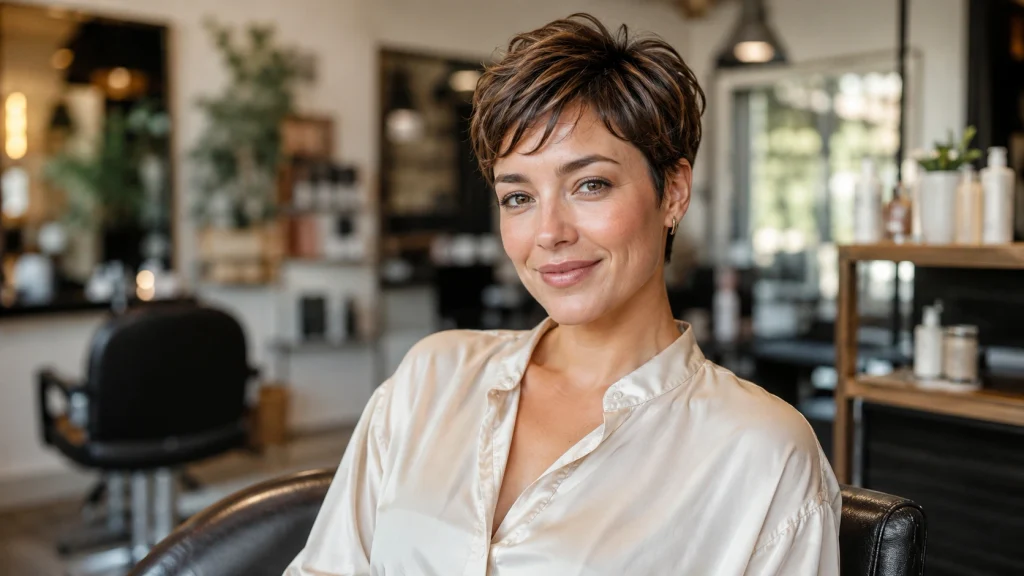
Pixie cuts for fine & thin hair can make a huge difference when your strands have a habit of going flat by 10 a.m., no matter how much product you work into your roots. I’ve had clients cry in my chair over this, then walk out an hour later grinning at a pixie that finally gave their hair somewhere to go. The secret isn’t more volumizing spray—it’s the cut itself doing the heavy lifting. So let’s find the shape that makes your thin strands look thicker, healthier, and completely intentional.
My Styling Notes
I’ll never forget the client who came in before a two week trip to visit family in Charleston, right in the thick of August humidity. I gave her a gorgeous choppy, textured pixie, and under my blow dryer in a climate controlled salon it looked incredible. Three days later she texted me a photo and the crown had gone flat while the sides puffed into a triangle. That was the day I learned to ask where you live and what your month looks like before I even pick up the shears. Now if a client tells me she’s somewhere humid, I keep the internal layers a touch heavier instead of razoring everything thin, because blunt ish edges hold their shape when the air gets thick. My clients call it my “humidity clause,” and honestly, it’s saved more pixies than any product I’ve ever recommended.
18 Effortless Volume Secrets Every Fine Haired Woman Should Master
1. What Actually Makes Fine or Thin Hair Look Fuller
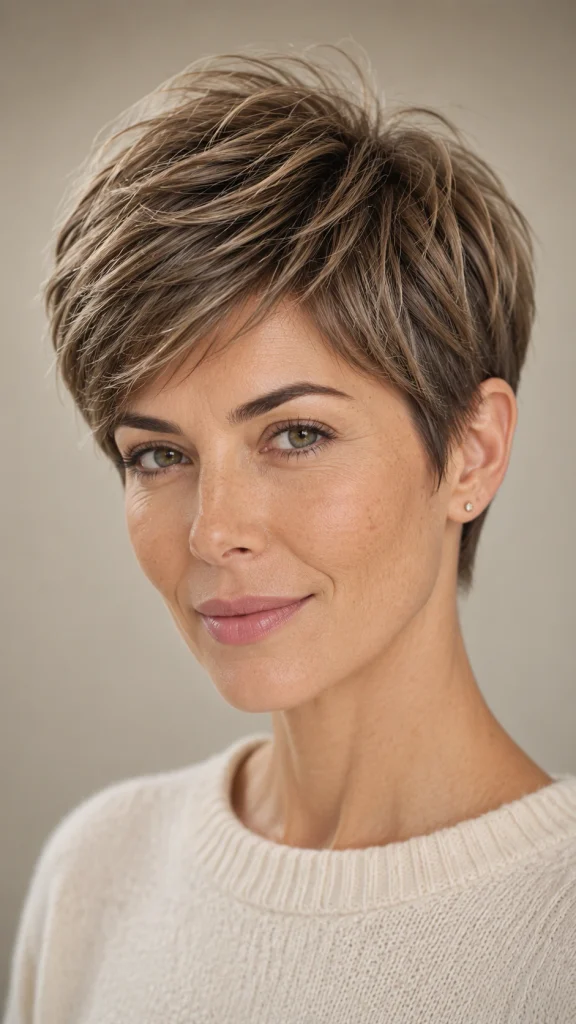
Most people think volume comes from a product, but honestly, it starts with the haircut itself. Fine hair has fewer individual strands per square inch, so when a stylist removes weight in the right spots instead of just chopping length, the remaining hair has room to actually lift and move. One thing I always tell my clients is that a pixie works because it eliminates the dead weight that pulls fine hair flat against the scalp all day. Once that weight is gone, even a light mousse does twice the work it used to. This is why so many women switch to a pixie and suddenly feel like their hair has doubled in thickness, when really it just finally has somewhere to go.
2. Textured Pixie Cuts That Add Instant Volume
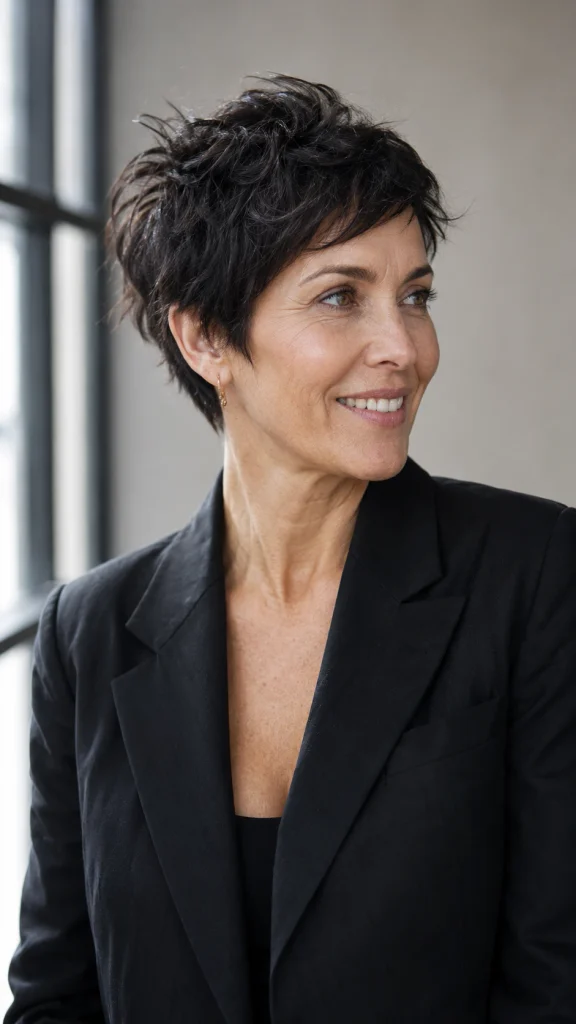
A textured pixie is probably the single best cut for fine hair, hands down. The layers are cut at different lengths on purpose, which creates little pockets of lift instead of one flat sheet of hair.
- Great for fine, straight hair that tends to sit too smooth
- Pairs beautifully with a light texturizing spray for extra grip
- Needs a trim every six to eight weeks to keep the shape crisp
If you have thin hair and prefer a look with more movement and a touch of edge, exploring a shag pixie for thin fine hair can give you that extra lift and effortless texture.
3. Layered Pixie Cuts for Soft, Fuller Movement

Layering is a little different from texturizing, and I find a lot of women mix the two up. Where texturizing removes weight in choppy, irregular chunks, layering builds height in soft, blended stages, almost like stacking. It’s a gentler effect, so if you want volume without the edgy, piecey look, this is your lane. I usually recommend layering for clients who still want something soft and feminine at the office but crave that lift at the crown. It also grows out more gracefully than a heavily texturized cut, which matters if you’re not the type to sit in a salon chair every five weeks.
4. Choppy Pixie Cuts for a Bold, Undone Look
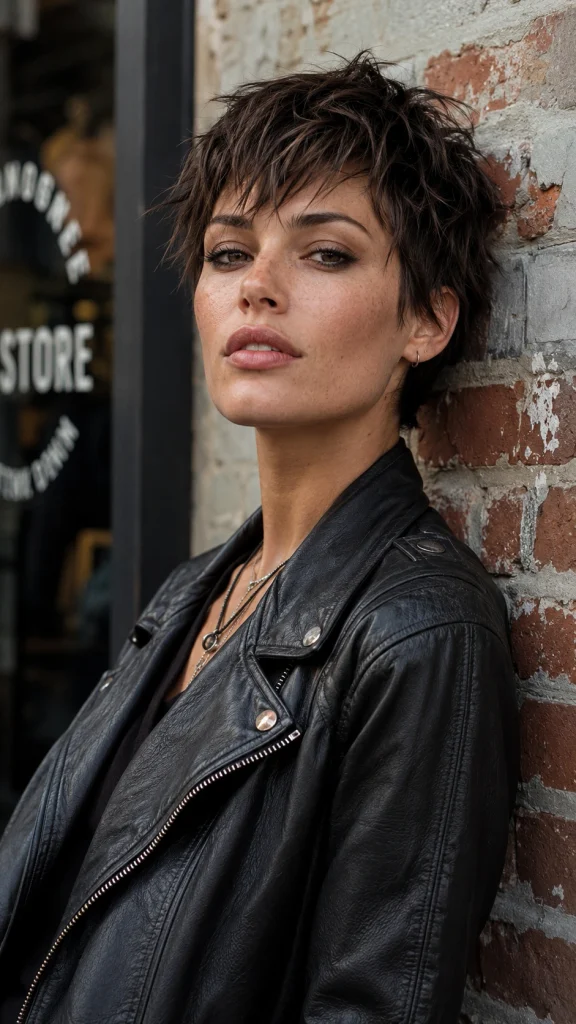
This one’s for the women who want their hair to look a little rebellious. A choppy pixie uses sharper, more disconnected layers, so the ends look intentionally messy rather than smooth and blended.
According to Wikipedia’s guide on hairstyles, choppy texturing creates visual volume by varying strand lengths.
Works beautifully with a matte paste for that lived in finish. Tends to suit fine hair with some natural wave or bend, and it’s a great option if you’re tired of “perfect” hair.
5. Feathered Pixie Cuts for a Soft, Airy Finish
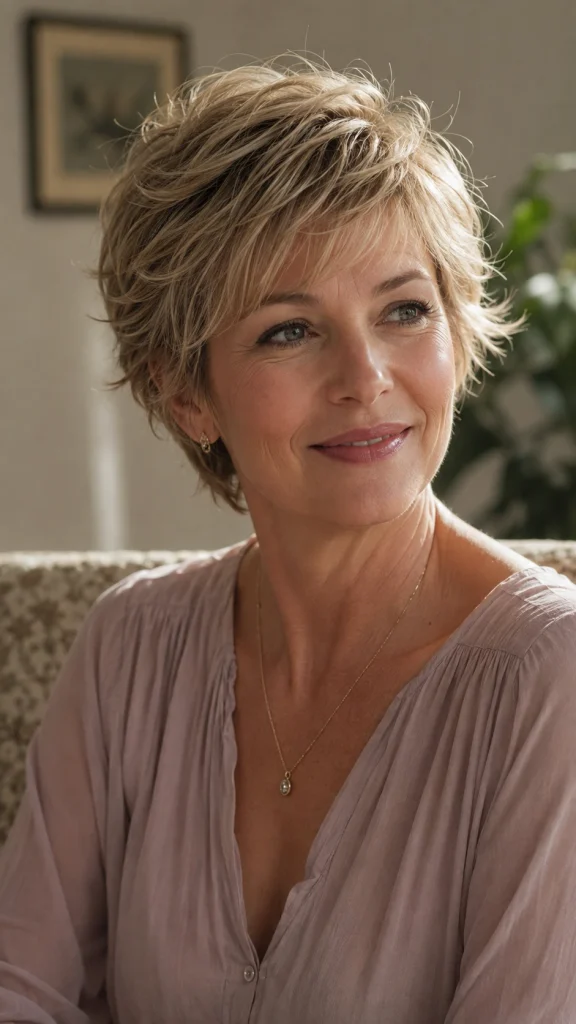
Feathered pixies are having a real moment right now, and I get it, they’re romantic without being fussy. The ends are cut fine and blended so they almost flick outward, kind of like a bird’s feather, which is exactly where the name comes from. What I love about this style for fine hair is that it doesn’t rely on bulk to look pretty, it relies on movement. A quick trick I’ve learned is to have clients dry their hair with a small round brush, brushing the ends outward rather than under, since that’s what really shows off the feathering.
Which one of these cuts feels like the biggest change from what’s currently sitting in your bathroom mirror?
6. Wispy Pixie Cuts for a Delicate, Feminine Vibe
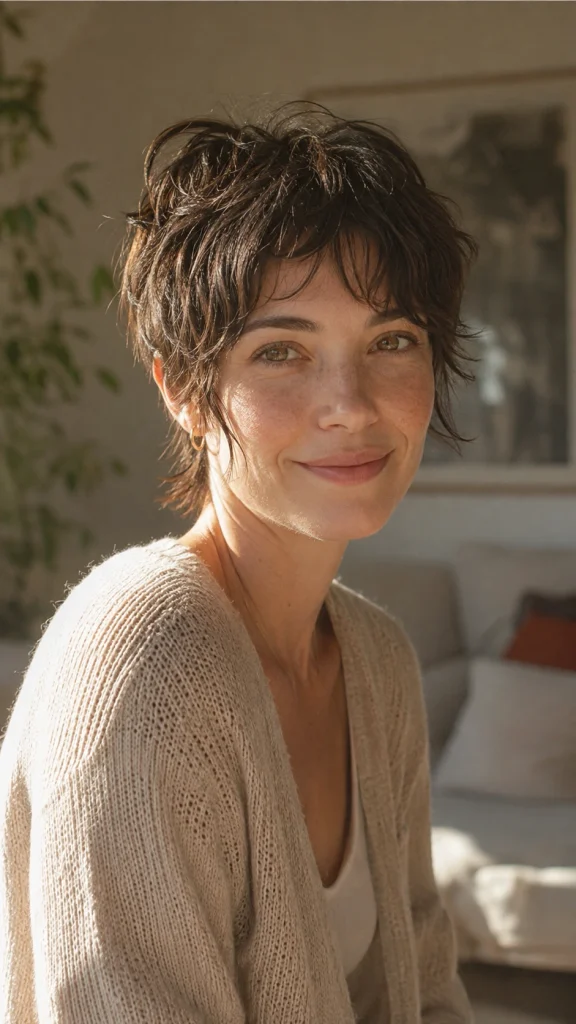
Wispy pixies keep some length around the face and neck instead of going razor short everywhere, which softens the whole look. It’s a favorite for anyone who’s a little nervous about committing to something too severe on their first big chop.
For those looking for everyday simplicity, choosing low maintenance hairstyles for women over 60 with fine hair provides soft, flattering framing without high-upkeep routines.
- Flattering for round or square face shapes since it softens angles
- Easy to grow out compared to blunt, uniform pixies
- Looks especially pretty with a slight side part
7. Shaggy Pixie Cuts for Effortless, Undone Texture

Shaggy pixies borrow a lot from that 70s rockstar energy, and honestly, they’re one of the most forgiving styles I cut. The layers are choppy and irregular on purpose, so if you skip a wash day or get caught in the wind, it barely matters, the messiness is baked into the design. I tell clients this is the pixie equivalent of “I woke up like this,” except you actually spent good money to look that effortless. It’s a fantastic choice if your lifestyle doesn’t leave much time for styling every morning, since a little sea salt spray and finger tousling is really all it needs.
8. Long Pixie Cuts for Fine Hair That Want More Versatility
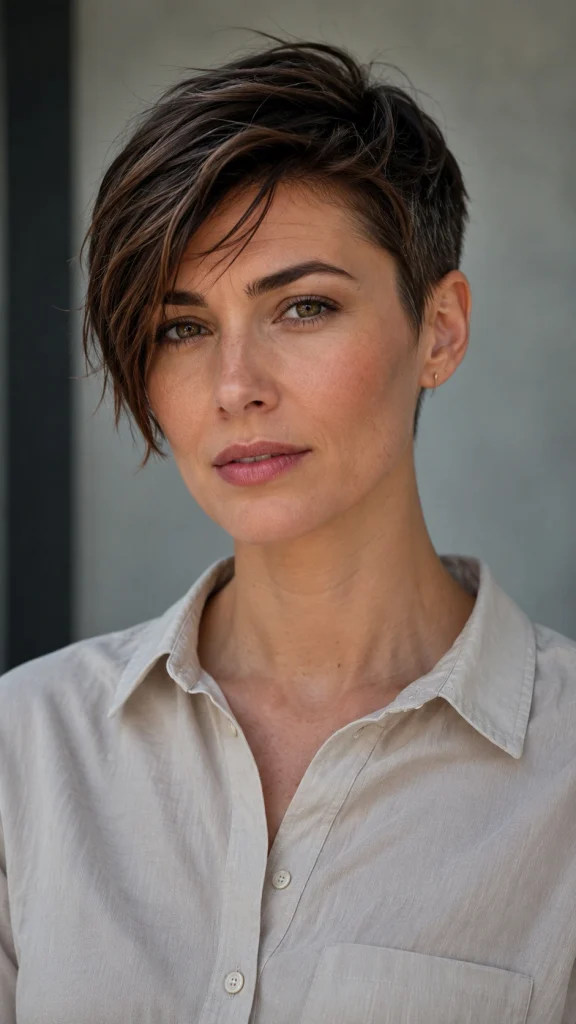
If the idea of going super short still makes you nervous, a long pixie is the perfect bridge. There’s enough length on top to actually style it differently day to day, slicked back, side swept, even tucked behind the ears, while the sides and back stay short enough to keep that lightweight, low bulk feeling fine hair needs. I often recommend this to clients transitioning out of a lob who aren’t ready to fully commit to a short crop yet. It gives you nearly all the volume benefits of a classic pixie with a slightly easier emotional adjustment period.
9. Pixie Cuts With Bangs for Extra Face Framing
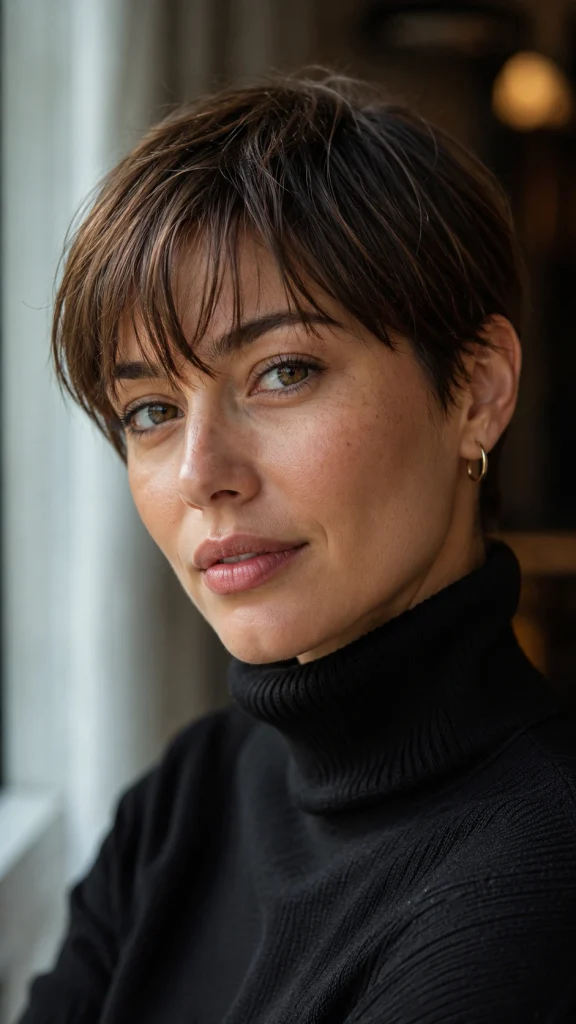
Adding bangs to a pixie changes the whole personality of the cut, and for fine hair, the right bangs can genuinely fake density where you need it most. Side swept bangs tend to look the most polished, while a blunt fringe reads a little more editorial and bold.
- Wispy bangs are the lowest maintenance option, they barely need styling
- Blunt bangs need more frequent trims to stay sharp
- Side swept bangs work well for almost every face shape
10. Short Pixie Versus Longer Pixie, How to Actually Decide
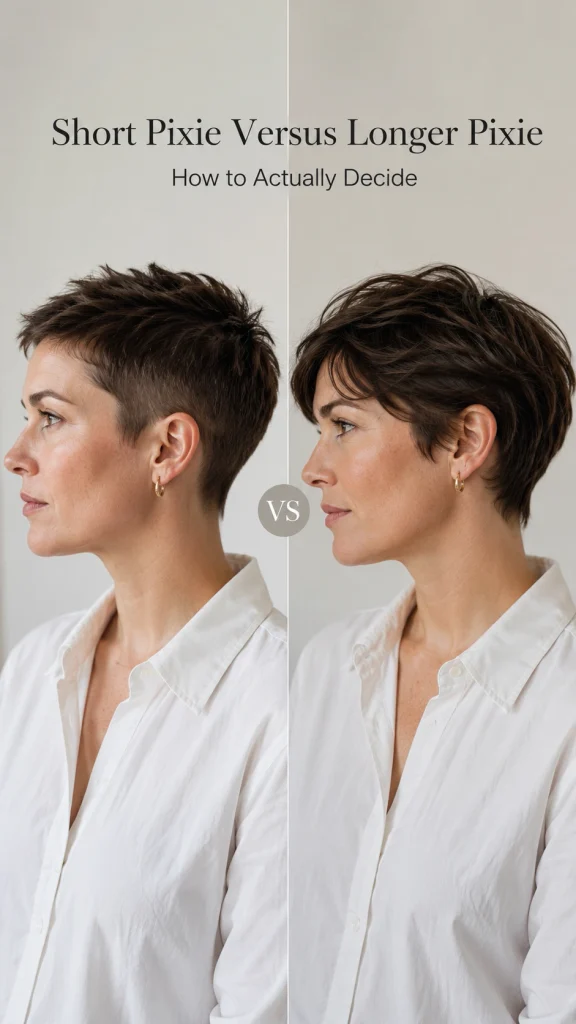
This is probably the question I get asked most in the chair, and there’s no universal right answer, it really comes down to your lifestyle and how much fuss you want in the morning. A short pixie is lower maintenance day to day but needs more frequent trims to keep its shape. A longer pixie gives you more styling options and a slightly longer window between salon visits, but it can flop a bit more on humid days if it’s not cut with enough internal support. I usually ask clients one simple question before deciding, how many minutes do you actually want to spend on your hair each morning, and the honest answer usually points us in the right direction.
11. The Stylist Conversation, What to Actually Say in the Chair
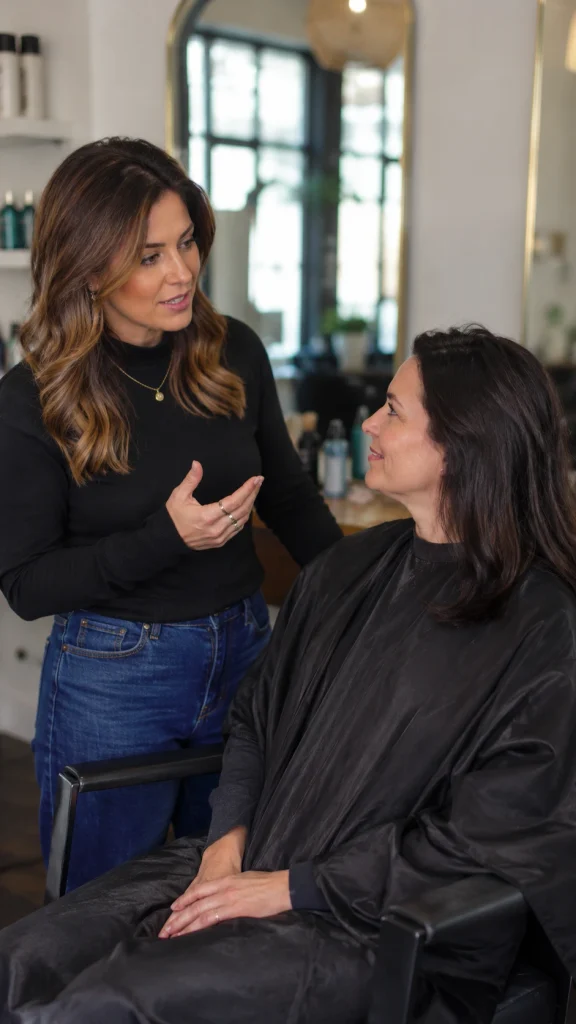
Walking in and saying “I want volume” isn’t specific enough, and I say that with love. Stylists hear that phrase constantly and it can mean ten different things depending on your hair type.
- Ask for internal layering instead of just length removal
- Mention your natural texture and how much time you spend styling
- Bring a photo, but be clear about what you want borrowed from it, the length, the fringe, or the texture
12. Budget Breakdown, What a Good Pixie Actually Costs
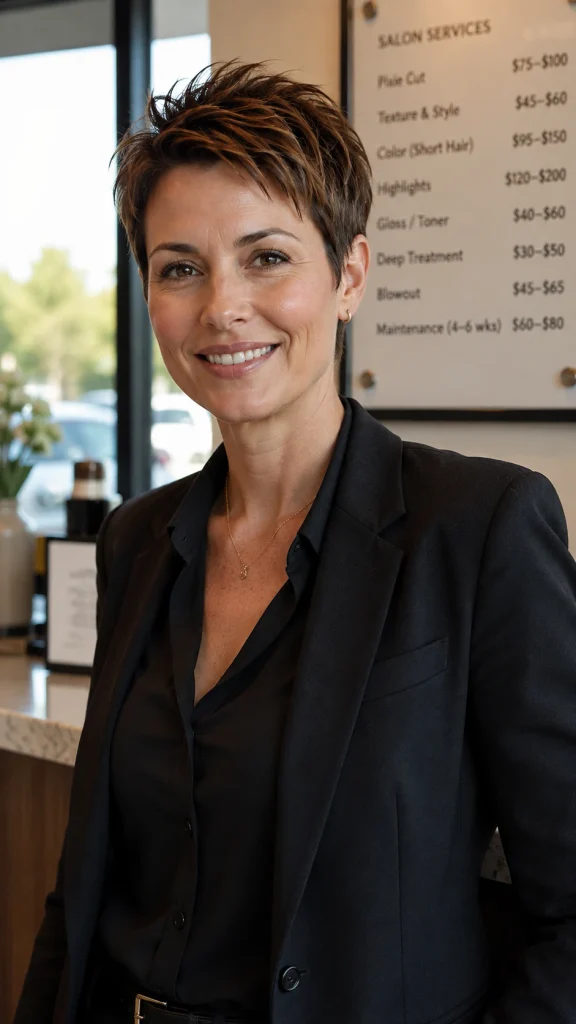
Here’s something nobody talks about enough, a pixie is not the place to shop for the cheapest chair in town. Since there’s no length to hide mistakes, precision matters more than almost any other haircut, and that precision usually comes with a price tag. In most mid sized US cities, a solid pixie cut from an experienced stylist runs somewhere between sixty five and one hundred fifty dollars, while big city salons or celebrity level stylists can run well past two hundred. If that number makes you wince, I always tell clients it’s smarter to save up for a great initial cut and a great initial style lesson, then stretch out the maintenance trims at a slightly more affordable salon once the shape is established.
13. My Styling Diary, What I Learned the Hard Way
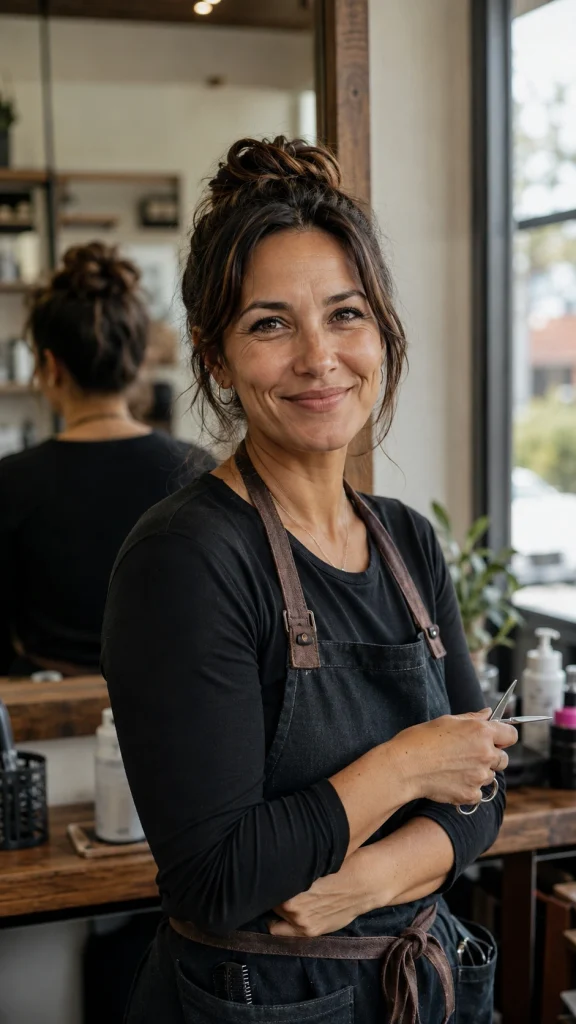
I mentioned this earlier, but it’s worth circling back to because it shaped how I cut pixies for every client since. That Charleston trip taught me something I now ask every single person in my chair, where do you live and what does your month actually look like. A cut that looks flawless under salon air conditioning can completely change shape the second it hits real humidity or a windy commute. Now I build in what I jokingly call my humidity clause, slightly heavier internal layers for anyone heading somewhere sticky, because blunt edges hold their form when the air gets thick in a way that wispy, razored ends just can’t.
Out of all these options, which one actually fits your budget and your morning routine best?
14. The Maintenance Schedule Nobody Actually Tells You
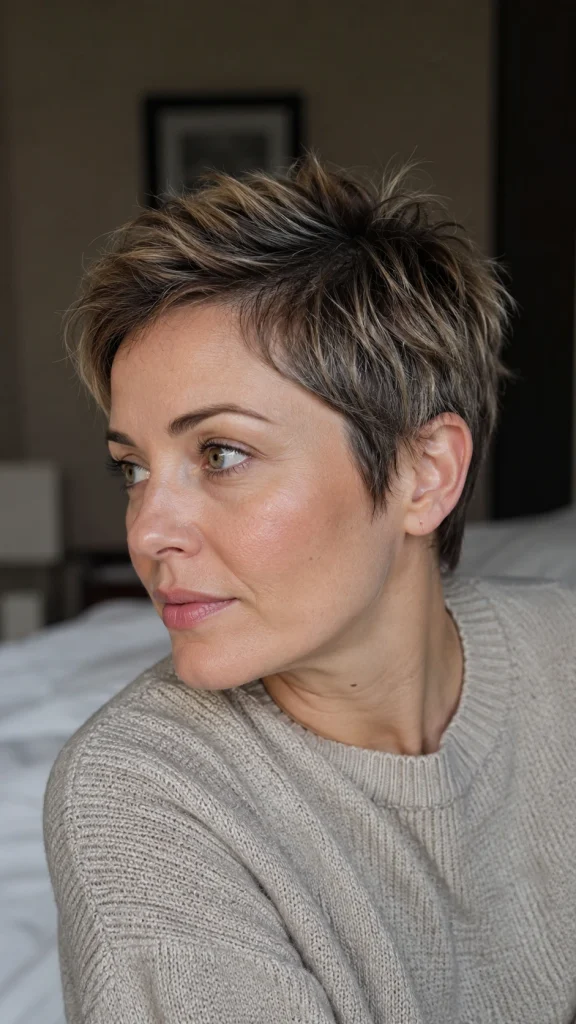
Everyone talks about “getting a trim every six weeks” like it’s a universal rule, but the truth is a little messier than that.
- Weeks one through three, your pixie looks its absolute best
- Weeks four through five, fine hair especially starts losing shape at the crown
- Week six and beyond, most people hit what I call the slump, where it just looks tired no matter what product you use
Knowing which stage you’re in helps you plan around it instead of being surprised by it, whether that’s booking a big event earlier in the cycle or just being kind to yourself on a slump week.
15. Climate Proofing Your Pixie for Real Life
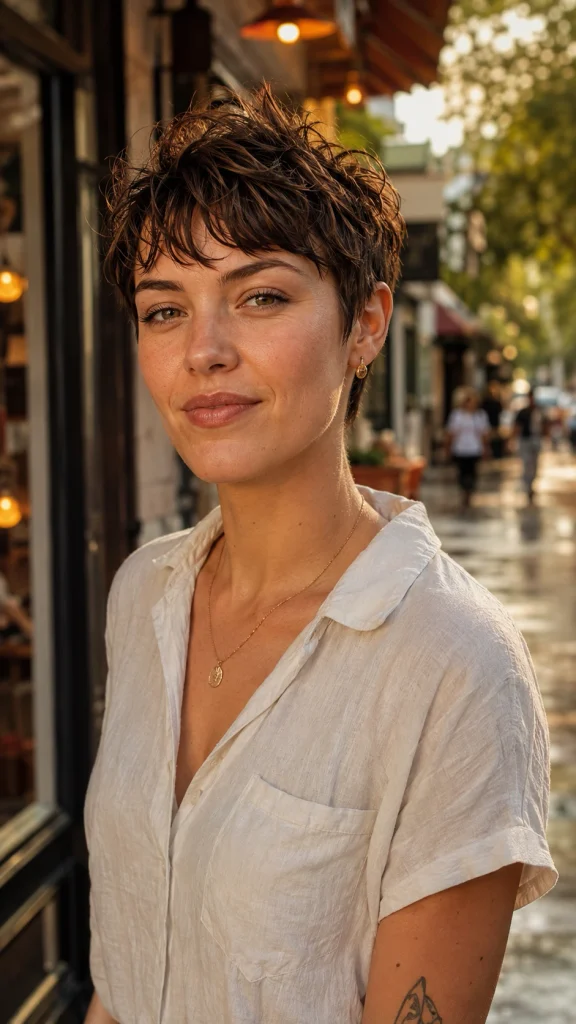
Your zip code honestly matters more to your pixie than most product bottles will admit. In humid places like Houston or Miami, fine hair tends to frizz and lose its crisp lines, so a lightweight anti humidity cream applied to damp hair works better than piling on more product later. In dry climates like Phoenix or Denver, the challenge flips, static becomes the enemy, especially in winter, and a small amount of leave in serum smoothed over your palms before styling makes a real difference. Cold, snowy regions bring their own issue too, hat hair, so I always tell clients in the Midwest to keep a travel size dry shampoo and a wide tooth comb in their bag for a thirty second refresh after pulling off a beanie.
16. Product Edit, Budget Picks and Splurge Picks
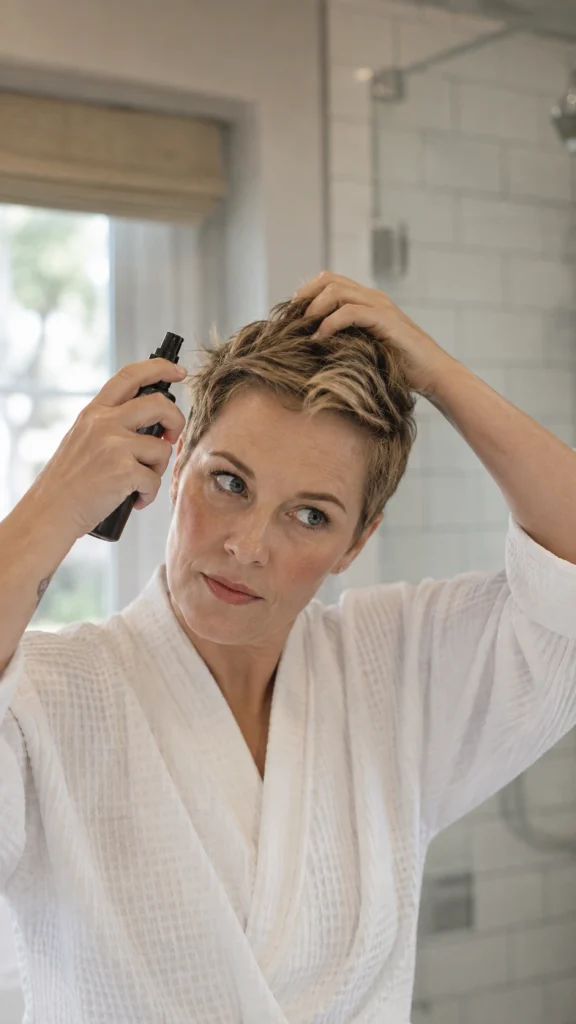
You genuinely do not need fifteen products to maintain a pixie, but a few good ones make a real difference. On a budget, a drugstore volumizing mousse applied at the roots on damp hair goes a long way, and a travel size dry shampoo handles second day flatness.Beauty editors at Allure recommend lightweight mousses to build lift without weighing down fine hair.If you only buy one higher end product, put your money into a quality texturizing paste, as it actually shapes the cut rather than just adding volume.
17. Who Should Think Twice Before Getting a Pixie
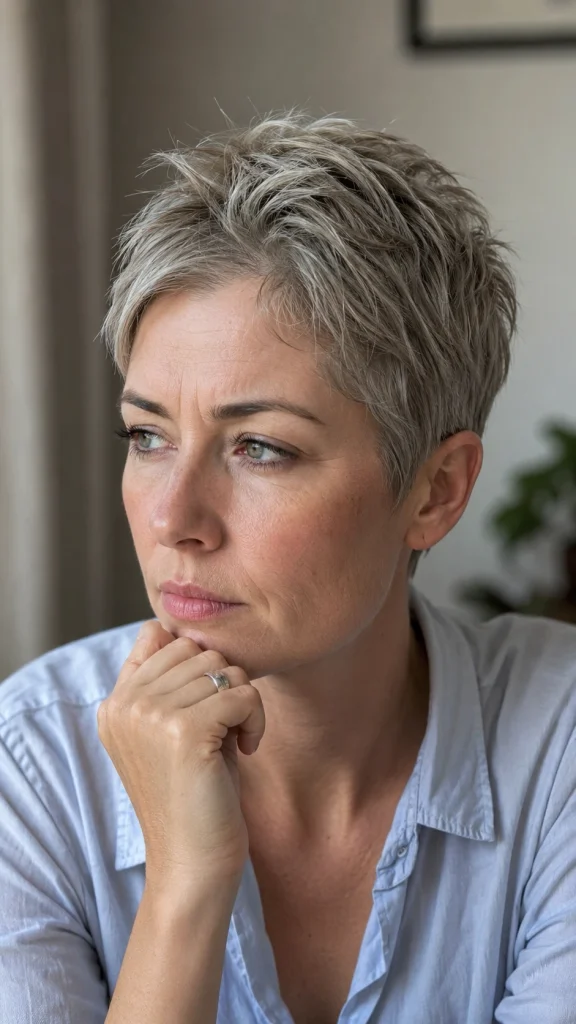
I love this cut, but I’d be doing you a disservice if I pretended it’s right for absolutely everyone. A strong cowlick at the hairline can genuinely wage war against certain pixie shapes, especially very short, blunt ones, and some clients spend more time fighting that one section than styling the rest of their head combined. If your job or lifestyle means you’re wearing hats constantly, a pixie can get squashed and require more touch ups than a longer style would. And honestly, if you’re someone who dreads the idea of trims every six to eight weeks no matter what, it’s worth being honest with yourself before you commit, since growing out an awkward pixie stage is its own kind of patience test.
18. Growing Out Your Pixie Without Losing Your Mind

There’s an in between stage with every pixie grow out that nobody warns you about, somewhere around month two or three, where it’s not short anymore but it’s definitely not long either. My best advice here is to keep trimming during this phase, not skip trims, since regular shaping keeps the awkward stage from looking like an accident rather than an intentional transition.
- Use headbands or small clips to manage the top as it lengthens
- Ask your stylist for a soft shag shape mid grow out, it photographs so much better than an untouched grow out
- Be patient, hair grows roughly half an inch a month, so full transitions realistically take four to six months
Tell me, which pixie cut is your favorite from this list and what’s pulling you toward it?
Top 6 Cuts for Fine & Thin Hair
| Look / Item | Estimated Price | Care Level | Where to Buy |
|---|---|---|---|
| Textured Pixie Cut | 65 to 150 dollars | Medium | Texturizing paste on Amazon |
| Layered Pixie Cut | 65 to 150 dollars | Medium | Root lifting mousse on Amazon |
| Choppy Pixie Cut | 70 to 160 dollars | Medium | Matte paste on Amazon |
| Feathered Pixie Cut | 75 to 160 dollars | Low | Lightweight serum on Amazon |
| Wispy Pixie Cut | 65 to 140 dollars | Low | Volumizing spray on Amazon |
| Shaggy Pixie Cut | 60 to 130 dollars | Low | Sea salt spray on Amazon |
Your 60 Second Pixie Picker
By Budget
Budget Friendly Picks
- Root lifting mousse under 15 dollars on Amazon
- Compact dry shampoo under 10 dollars on Amazon
- Textured pixie cut, since it needs the least product to look finished
Worth the Splurge
- Lightweight texturizing paste on Amazon
- A first cut from an experienced pixie specialist, this is where precision really counts
- Anti humidity cream on Amazon if you live somewhere sticky
By Lifestyle
Busy Professionals
- Shaggy or wispy pixie, both forgive a rushed morning
- Dry shampoo on Amazon for instant second day refresh
Hot Weather Styling
- Choppy or feathered pixie, they hold shape better than flat, sleek cuts
- Anti humidity cream on Amazon applied to damp hair
New Moms
- Shaggy pixie, since it needs almost no daily styling
- Sea salt spray on Amazon for effortless texture with zero effort
Weekend Casual
- Textured or layered pixie, easy to tousle and go
- Matte paste on Amazon for undone, no fuss texture
Frequently Asked Questions
Will a pixie cut make my fine hair look thicker?
Yes, and it’s usually the single fastest fix for flat, thin looking hair. Removing weight through smart layering lets the remaining strands lift instead of collapsing under their own length, so the whole head reads fuller almost instantly.
How often do I need trims for a pixie with fine hair?
I usually recommend every six to eight weeks to keep the shape sharp. Fine hair tends to lose its crown volume a little faster than thicker hair, so if you notice it flattening by week five, that’s completely normal, just book accordingly.
What is the best pixie cut for thinning hair?
A textured or feathered pixie tends to work best since both rely on strategic layering rather than bulk. They’re gentler on the scalp visually too, since they avoid the razor thin, choppy ends that can expose more scalp on very fine strands.
Can I still curl or style a pixie cut with fine hair?
Absolutely, a small barrel curling wand or a round brush blowout both work great on short fine hair. Just go easy on heat since fine strands damage faster, and always use a lightweight heat protectant first.
Does a pixie cut work for round or square face shapes?
Yes, it just depends on the styling details rather than the cut itself. Wispy, side swept bangs soften square jawlines beautifully, while extra volume at the crown helps elongate and balance a rounder face.
Conclusion
Fine hair has been holding out on you this whole time, it just needed a cut that finally gave it a job to do. You don’t need thicker strands to have big hair energy, you just need the right shape and maybe five minutes with a little product. So book that consultation, screenshot the style that made you gasp a little, and walk into your next appointment ready to actually love your hair on a Tuesday morning. Which one of these eighteen looks are you saving right now, and are you brave enough to finally make the chop?

7 thoughts on “18 Volume-Boosting Pixie Cuts for Fine & Thin Hair”